

Sign up for an absolute no-cost account and experience the future of logistics today.
Create Your Free Account!

MyDello: Why Every Logistics Manager Needs to Know About It

Introduction

As a professional deeply immersed in the Nordics logistics sector, I appreciate the distinctive hurdles that we routinely confront. We find ourselves in a swiftly changing global commerce landscape, and for mid-sized businesses’ logistics managers, it’s often a herculean task to stay abreast of this dynamic environment.

Amidst this transformation, one organization stands out—MyDello. They’re innovators in logistics tech, aimed at bringing about a sea change in the worldwide logistics domain through digitization, and it’s evident their endeavours are making a significant difference.

Remember the days when tracking each consignment was a manual task? Or the frustratingly long waits for getting a shipping estimate on call? Thanks to MyDello’s Game-Changing Logistics Technology, those are rapidly becoming outdated practices.


The Present Scenario of the Nordics Market Supply Chain

Operating in the logistics realm within the Nordics, it’s apparent that effective supply chain management is not just industry jargon. It forms the vital framework of a prosperous operation. Nevertheless, it carries its set of impediments. Juggling numerous freight providers, adapting to varying shipping rates, and deciphering customs guidelines – it can swiftly escalate into a logistical conundrum.


Recall the era when each shipment needed manual tracking? Or when obtaining a shipping quote required endless waits on the phone? MyDello’s Game-Changing Logistics Technology is making these inefficient practices increasingly obsolete.


The MyDello Proposition

MyDello has developed an advanced digital freight forwarding portal, fundamentally streamlining the process. Imagine a single platform meeting all your logistics needs – that’s precisely what MyDello’s logistics technology delivers. Extensive email exchanges and draining phone conversations are now a thing of the past. A few clicks, and you’re done.


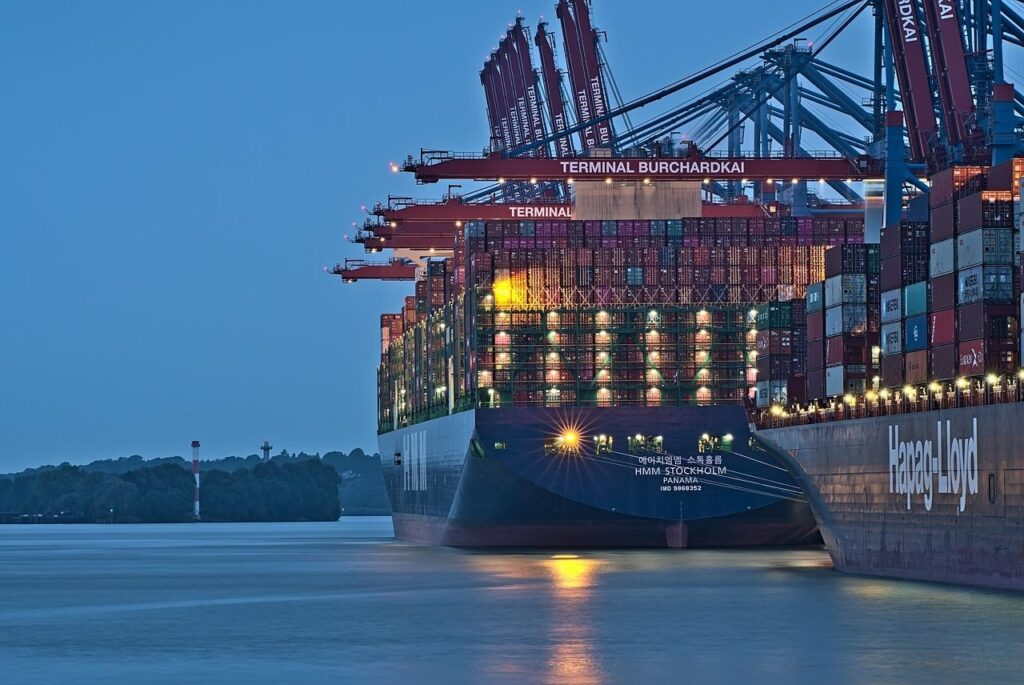
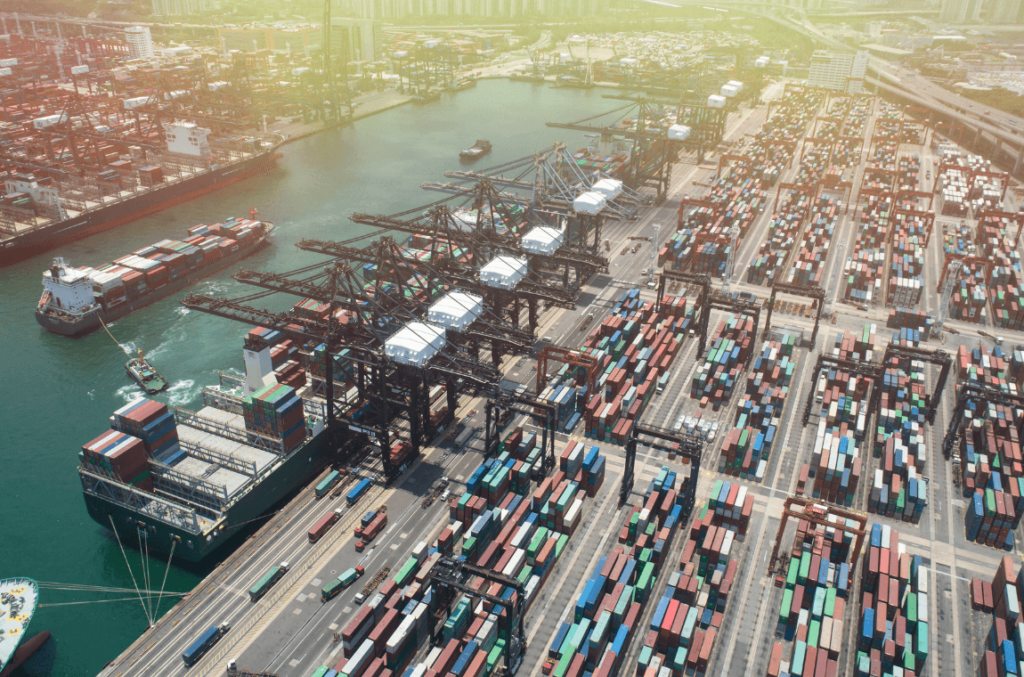
MyDello's logistics technology in action: A busy international port overflowing with neatly stacked containers representing global trade.
Real-world logistics: This high-traffic port scene illustrates the scale of global commerce MyDello’s game-changing technology supports every day.


MyDello’s Logistics Tech: Key Highlights

Real-time Quotes Across All Transport Channels

MyDello’s pioneering logistics tech provides immediate quotes for global shipments across all transport mediums, including air, road, rail, or ocean. It’s akin to having a complete shipping department at your service. Visualize needing to urgently send a pallet to Malmö on a Friday evening, and the most competitive quote is just a click away. Quite a game changer, isn’t it?


Holistic Solutions

However, MyDello’s logistics tech offers more than just quotes. Their array of services extends to courier service, air freight economy, rail freight, ocean freight, road freight, global customs brokerage, insurance, and even e-commerce solutions.


Versatility and Cost-effectiveness

The distinguishing aspect of MyDello’s logistics tech is the flexibility it provides. Users can juxtapose various transport options and discover the most economically viable solution. Recall that time when your regular rail freight option was delayed, leading to a frantic search for an alternative? With MyDello, you have plenty of options, and you can reduce logistics expenditure by up to 20%.


Effect of MyDello’s Logistics Tech on Supply Chain Operations

When we talk about its influence on supply chain functions, the statistics speak for themselves. Since its inception, MyDello has onboarded almost 5000 customers, and the reasons are evident.

Remember when incessant back-and-forth with freight forwarders was our principal bottleneck? With MyDello, that’s a thing of the past. Everything is managed on a single platform, thereby simplifying and accelerating the process. Furthermore, the 24/7 platform availability allows us to handle logistics at our convenience, all courtesy of MyDello’s logistics tech.


The Road Ahead in Supply Chain with MyDello

So, what does MyDello’s progressive tech imply for the future of logistics? It aligns seamlessly with contemporary logistics managers’ needs. Envisioning a completely automated logistics sector, MyDello plays an instrumental role in actualizing this future

Listening to You: MyDello’s New USA-Sweden Import Service In Response to Customer Feedback


Introduction

In the dynamic world of global commerce, staying ahead of the curve is essential, that’s why we’ve launched the New MyDello USA-Sweden Import Service. Digital technology is transforming logistics in the Baltic and Swedish markets, a phenomenon I’ve personally witnessed in my years in the industry. But as a logistics manager in a medium-sized company, you’re likely familiar with the challenges of navigating this ever-changing landscape. That’s where MyDello steps in. Our focus is to actively listen and respond to our customer’s needs, and our latest achievement is a prime example of this commitment.


Instantly compare options across hundreds of shipping providers to find the best possible solution for your shipping needs. Create a Free Account to get an instant quote.

The Demand for USA-Sweden Import Services

Many of our customers have expressed a need for an import service between the USA and Sweden. It’s easy to see why. The USA is a massive player in global commerce, and Sweden, with its robust economy and strategic location, is a vital hub in the Baltic region. Fostering stronger connections between these two nations is a significant step forward for businesses in both countries.


Listening to the Customer Feedback

MyDello’s approach to feedback is more than just a box-ticking exercise. Every comment, every suggestion, is taken seriously. We believe in continuous improvement, and our customers provide the insights necessary to guide our path. It was their feedback that first drew our attention to the potential of a USA-Sweden import service.

I recall a meeting with one of our long-standing clients. As we shared a cup of coffee, the logistics manager shared their struggle of having to coordinate with multiple vendors for their USA-Sweden shipments. It was a lightbulb moment for me, emphasizing the necessity of a direct service on this route.


Airplane flying over shipping containers – MyDello's USA-Sweden Logistics Route
An airplane in flight over a stack of vibrant shipping containers, symbolizing MyDello’s new, expansive USA-Sweden import service


Negotiating and Securing Partnerships

It wasn’t easy. Establishing a new route, especially one as important as USA-Sweden, is a complex process. It involves finding the right partners, ones who share our commitment to service quality and efficiency. But our team was up for the challenge. After numerous meetings, calls, and yes, a lot of coffee, we finally secured partnerships to facilitate the new import service.


Launching the New MyDello USA-Sweden Import Service

With great excitement, we officially launched the New MyDello USA-Sweden Import Service. This isn’t just a new offering – it’s proof of our commitment to our customers. The service is specifically designed to streamline operations for logistics managers in medium-sized companies, making their work not only easier but also more efficient.


The Impact of the New Service on Logistics Managers

The introduction of the New MyDello USA-Sweden Import Service means fewer logistical hurdles for logistics managers. No more coordinating with multiple vendors or dealing with unreliable services. Our USA-Sweden import service simplifies the process, saving you both time and money. It also opens up new business opportunities, connecting your company directly to one of the world’s largest economies.


MyDello’s Commitment to Continued Expansion and Improvement

Our journey doesn’t end here. At MyDello, we’re committed to continuously listening to our customers and innovating our services based on their needs. We’re already exploring potential new routes and services to better serve you. Stay tuned, because this is just the beginning.


Conclusion

Introducing the new USA-Sweden import service has been a fulfilling journey for us at MyDello. We’ve listened to you, our valued customers, and responded with a solution that will simplify your operations and expand your business horizons. So, here’s an invitation – join us on this journey, and let’s experience the benefits of our new service together. For any inquiries or further information, our team is always available to assist you.


International transport and transactions involve a lot of different documents. One of the most important pieces of documentation is the waybill, which depending on the mode of transportation can also be called CMR, bill of lading or air waybill. In essence, a waybill is an important document that provides essential information about a shipment and often acts as a legal contract between the sender and carrier.

In this article, we will give an overview of the most common types of waybills and their main differences.

MyDello takes the stress out of global shipping. Understanding your shipment size can be difficult at the best of times, MyDello has built an online calculator to simplify this whole process. 


Different types of waybills

A waybill or a bill of lading is required when shipping goods internationally, whether by air, sea, rail or road. The document’s primary purpose is to provide information about the shipment, but in some cases can also act as a receipt for payment and be required for insurance purposes. As a rule of thumb – whenever you plan to ship something, you will need a waybill.

Things can get a bit complicated when it comes to the documents needed for different modes of transportation – air freight and ocean freight have different documents attached to shipments. Sometimes there can be different options in documentation even across a single mode of transportation.

In general:

  • A shipment by ocean freight requires a bill of lading.
  • By air freight an air waybill.
  • By road transport a CMR (abbreviation of the lengthy ‘Contrat de Transport International de Marchandises par Route’) note.
  • By rail freight a CIM document.

Bill of lading (ocean freight)

A bill of lading is required when transporting goods by ship. Sometimes also called ‘ocean bill of lading’, this document should not be confused with a regular waybill. The difference being that a bill of lading is authoritative in nature which means it acts as the title to the goods in question – whoever has the bill of lading, possesses the goods.

Nevertheless, a waybill and bill of lading generally contain the same types of information:

  • description of the goods,
  • shipment dates,
  • contract terms,
  • information about the shipper and carrier and
  • destination info.

While a bill of lading is not always necessary (such as when shipping with or between trusted parties), the document is legally binding and guarantees smooth shipping.

It is also required whenever there’s a third party involved with the shipment process. Creating a bill of lading is relatively simple, as there are many templates available online and all you have to do is fill it with the right information. The bill of lading is filled in by the seller, but must be signed by an authorized agent to become legally binding. To make things more complicated, there are actually different kinds of bills of lading as well. You can read more about them here.

Two ocean vessel with containers at port
Goods shipped by ocean freight require a bill of lading. There are different types of bills of lading. © Photo: Pixabay.

Air waybill (air freight)

An air waybill (AWB) is, as the name suggests, an air consignment note that goes with goods shipped by air transport, providing information about the shipment and allowing it to be tracked.

Just like the bill of lading, an AWB is a legal contract of carriage between the shipper and the carrier in international trade and a receipt of goods by an airline. It also sets the terms and conditions of the shipment. As with any waybill, multiple copies will be made for all the involved parties.

The airway bill contains:

  • the shipper’s name and address,
  • the consignee’s name and address,
  • origin and destination airport code (three letters).

It must also declare shipment value for customs, weight and other information about the shipment as well as any special instructions. The legal document also contains the conditions of the carrier’s terms and conditions, such as liability limits and claims procedures.


What is the difference between the air waybill and bill of lading?

The main difference between an AWB and a bill of lading is that the former is non-negotiable, meaning it doesn’t specify when the shipment will be sent or arrive. While bills of lading are legal documents between the shipper and carrier and also detail the type, quantity and destination of the goods, they also act as a receipt of shipment when the goods are delivered. An AWB being non-negotiable however does not cover the merchandise value – it is simply a contract for transportation.

CMR (road freight)

Also known as a CMR consignment note. This document is required for international shipping by road transport in order. The CMR is very similar to regular waybills with one main difference – it also acts as an insurance document. Should the goods become damaged or lost during transport, the CMR gives the owner of the goods a right to insurance claims against the carrier.

In general, the document acts as proof of the contract of carriage by road, determines the scope and responsibility for the operation and describes the parties involved. You can check here for more information about the insurance of international shipments.

CMR is governed and gets its name from the ‘Contrat de Transport International de Marchandises par Route’ (French for International Agreement on Contract for the International Transport of Goods by road) which has governed international road transport for more than five decades. The CMR document is usually given to the carrier (driver) by the sender as it can also contain instructions for the carrier.

Two trucks on the highway
Important to note: different modes of transport will require different waybills to accompany the goods. © Photo: Pixabay.


CIM document (rail freight)

Rail transport documents or rail consignment notes are most commonly referred to as CIM consignment notes or simply CIM documents. CIM documents are used in rail transport to confirm that the rail carrier has received the goods and to prove that a contract of carriage exists between trader and carrier.

It helps to know that international rail transport obeys the international and uniform system of laws of OTIF (Intergovernmental Organisation for International Carriage by Rail). The system of laws themselves are known as the COTIF (Convention concerning International Carriage by Rail) and the appendix B of that Convention is called CIM (Uniform Rules Concerning the Contract of International Carriage of Goods by Rail). Therefore, any transport documents created according to the CIM Convention are known as CIM consignment notes or CIM documents.

It is important to note that a CIM consignment note is a non-negotiable transport document, which means it’s not a document title of goods and that all rail carriers can deliver goods to the consignee without the original copy of the transport document. This also means that exporters and banks should be careful when working with a letter of credit that demands a rail transport document as a transport document, because neither exporters nor banks could secure goods as collateral.

Take advantage of Mydello’s years of logistics industry knowledge by contacting us and talking to our team of experts. 


Summary

Waybills, bills of lading or other similar documents (depending on the transportation method) are essential documents whether shipping goods by air, sea or land. Different types of transportation require different kinds of waybills, but in essence, they all provide proof of contract between the sender and carrier and information about the shipment.

Although there are many online templates and guides for creating waybills, it can be a daunting task for anyone new to the international logistics sector. MyDello deals with international shipping and trade documents every single day and knows every little detail there is to know about these procedures. Do not hesitate to contact us whether you need advice with waybill documents or want to trust your shipments to an experienced third party.

Entering a foreign market requires a great deal of preparation, and the need to think through a strategy, marketing activities and logistics solutions. As the logistics platform MyDello recently entered the Swedish market, we would like to share with you tips and advice on what to consider when entering the Swedish market and what you should know about Swedish business culture.

Instantly compare options across hundreds of shipping providers to find the best possible solution for your shipping needs. Visit MyDello to get an instant quote.


Behaviour and consumption patterns

Get to know the behaviour and consumption patterns of your new customers. While it may seem that globalisation has homogenised the general consumer culture in Europe, in reality, each country has different habits.

Local regulations

You must familiarise yourself with those local regulations that affect your business. Many areas are regulated within the European Union; however, in some cases, additional local requirements and standards may apply.

Importance of the Swedish language

Don’t underestimate the importance of the local language. The Swedes are very good at English, but you’ll always have an advantage if you speak to them in Swedish.

Creating trust and building long-term relationships are the key to success in Sweden. Estonians and Swedes have a lot in common, but there are a number of things you should keep in mind when doing business with the Swedes:

  1. Enjoy the meetings. Swedes like meetings. Therefore, be prepared for briefings, planning meetings, organisation meetings, and follow-up meetings. Stick to the agenda, and always prepare carefully.
  2. Planning is the basis for everything. As Swedes like to plan things in advance, planning skills are crucial. There is no room for spontaneity in Swedish business culture.
  3. It takes time to decide. Don’t expect decisions or results to come quickly. Because the Swedes take decisions by consensus, decision-making processes are long. Especially in large organisations. Relying on the facts, they analyse and reflect for a long time. This is why it is important to be patient and persistent and to recognise that results and agreements take time to achieve.
  4. Fika breaks. Never say no to a cup of coffee. Coffee breaks, or ‘fika’, are an integral part of Swedish business culture. Remember: don’t talk shop during coffee breaks. Fika is a good way to socialise and get to know each other better. There are usually two fika a day – in the morning and in the afternoon.
  5. Honour the small talk. Start every meeting with small talk. It plays an important role in building and maintaining relationships. Small talk also eases the pressure and leads to a deeper conversation. In general, the subject of small talk revolves around the weather, weekend plans, and other neutral topics.
  6. Take it easy. There is no hierarchy in Swedish organisations. Employees are treated equally, managers are treated informally, and communication is direct and sympathetic. It creates a pleasant and peaceful working environment.

All in all, before entering the Swedish market, we advise you to do your homework, get to know the Swedish market, and be patient. It is also important to visit trade fairs, where you can make contact with potential partners.

MyDello takes the stress out of global shipping. One platform, all freight modes, instant quotes. Find out more. 


One of the most common documents related to international shipping is the commercial invoice, a document that is required to export goods to other countries and is sometimes also referred to as an export invoice.

A commercial invoice is important for all participants in the supply chain – for the seller and buyer, the forwarders, the customs brokers, and also the bank. That’s why the main requirement for a commercial invoice is that it is completed in English so that all the participants in the process can understand the information indicated therein.

We all need a little advice sometimes, especially in an industry as complex as logistics, give us a call and benefit from MyDello’s years of experience.  


What is a commercial invoice?

Commercial invoices are used for calculating the taxes and duties paid in customs clearance and they also serve as proof of sale between exporter and importer. It should not be confused with other documents such as the proforma invoice, customs invoice, packing list or bill of lading.

While it’s not difficult to fill or create a commercial invoice for export, it’s essential that the invoice is created following proper procedure, contains all the necessary elements and is free of any errors.

Even a small error on a commercial invoice can have negative consequences for your business. This is why many traders choose to automate this task, removing any chance of human error.

Human behind the computer drafting an commercial invoice
Filing a commercial invoice isn’t difficult, but must be free of any errors. For this reason, it is often automated.

When is a commercial invoice required?

The commercial invoice should be issued by the seller (exporter) to the customer (importer) before the goods are dispatched.

When a shipment of goods is ready to be dispatched, the exporter prepares all the necessary documents, including the commercial invoice. To avoid any customs issues for the importer with regard to the calculation and application of duties or taxes, the exporter must provide accurate and truthful information about the goods in the commercial invoice.

A mistake in the buyer’s address or name, for example, can lead to failed shipping. Failure to include the description and purpose of the items inside the package might lead to problems with customs.


What information is important on a commercial invoice?

A commercial invoice must contain certain information, including the seller and buyer’s information as well as the terms of delivery and payment. It is essential to indicate the buyer’s name, address and contact details to ensure that the freight does not get held up on the way, and also all the information about the dispatcher in case questions arise during the shipping process.

A description of the goods and the correct HS code (customs code) are important factors in drafting a commercial invoice.

This information gives the state customs service an accurate understanding of what goods are being exported, and the information also helps the buyer to correctly calculate the taxes and customs fees, and then quickly draft all the required customs documents in the country of destination. The information must be truthful and reflect reality.

Customs codes can be checked on the website of the European Taxation and Customs Union.

When shipping goods within the European Union, a customs invoice is not required and is for informational purposes only. You can check the list of EU countries here.

When is a pro forma commercial invoice used?

Commercial invoices are sometimes mistaken for proforma invoices. The main difference between these is that the commercial invoice has an accounting value – the proforma invoice is purely informative.

When the terms of a deal are being agreed upon with a buyer, a pro forma invoice is sometimes drafted – this is a document with preliminary information about the goods exported, which is required for the buyer to make an advance payment.

A pro forma invoice is not an export document, so when dispatching goods abroad, make sure that they are accompanied by a properly drafted commercial invoice, otherwise, the shipment may be delayed at customs.


Commercial invoice template in the hand of human
All commercial invoices have a standardized format which means creating an invoice is a fairly straightforward task.


Step-by-step instructions for completing a commercial invoice

All commercial invoices have a standardized format which means creating an invoice is a fairly straightforward and simple task. The best way to do that is to follow a sample invoice. You should make sure the commercial invoice contains all the necessary fields even when following a sample document, however.

Information that must be included in a commercial invoice:

  1. the invoice number and date of issue
  2. the name and bank details of the seller, as well as their address and contact details
  3. the name, address and contact details of the buyer
  4. the country of origin of the goods (the country in which the exported goods were produced)
  5. the country of destination for the goods
  6. a full description of the goods and the type of packaging
  7. the customs code for the goods
  8. the quantity of the goods and packages in units
  9. the currency used
  10. the value and price of the goods
  11. any additional costs
  12. the conditions of shipment in accordance with Incoterms 2020
  13. the payment terms
  14. exporting date, destination and means of transport
  15. signature of the shipper

Once a commercial invoice is drafted, we recommend sending it to the buyer for approval, so that they can confirm that all information is indicated correctly.

When all conditions are agreed upon and the goods are ready for shipping, prepare 3 copies of the commercial invoice: one for customs in the country of consignment, one for customs in the country of destination, and one for the buyer of the goods. When shipping within the EU, these conditions are not essential.

Last but not least, the commercial invoice should be printed and included with the package in a transparent envelope so customs can verify the package later.

MyDello takes the stress out of global shipping. One platform, all freight modes, instant quotes. Find out more. 

Conclusion

The commercial invoice is a crucial document for all international shipping transactions. It acts both as proof of delivery as well as a mandatory document for any trades that cross borders. While it’s not difficult to create a commercial invoice, any error in the document can lead to your shipping getting cancelled or delayed.


Any business engaged in the importation, transit, exportation or other customs operations in the European Union will eventually come across and need an Economic Operators Registration and Identification (EORI) number.

In fact, it is required when exporting or importing goods in any member state by the EU customs legislation. This unique identification number is used to identify your business as an importer and allows you to reclaim your import VAT.

MyDello takes the stress out of global shipping. Take advantage of Mydello’s years of logistics industry knowledge by contacting us and talking to our team of experts. 


So, who exactly needs an EORI number, where is it used and how to get one?

Who needs an EORI number?

By definition, an EORI number is required for any economic operator registered in the EU who is involved in international trade. An EORI number is also required for any third-country operator looking to transport or sell goods into the European Union.

This number is used by EU customs administrations in every member state during all kinds of trade operations and procedures.

It should be noted that an EORI number is not limited to just businesses but can be issued and used by individuals engaging in international trade as well. In short: anyone looking to perform trade operations from within or with the EU will need an EORI number.

The only time you will not require an EORI number is when your business activities are contained within one member state – e.g. only in Estonia and there’s no import/export with other countries – or when moving goods for personal use only.

Where is an EORI number used?

Since EORI is basically the business’s identification number in the EU, it is used in all customs procedures performed by economic operators. It does not matter whether you are importing goods into the EU, the UK or other countries – when dealing with the European Union customs, you will need an EORI number.

Why do you need an EORI number outside and inside the European Union?

Any customs authority in the EU will need an EORI number to process the paperwork of any company or individual. While EORI numbers are required for all businesses and persons established in the European Union, economic operators looking to import, transport or otherwise engage in trade with a member state will also need an EORI number for customs legislation.

Situations, where an economic operator not established in the Union will need an EORI number, are:

  • for lodging a customs declaration in the customs territory of the EU;
  • lodging an Entry (ENS) or Exit Summary Declaration (EXS);
  • submitting a temporary storage declaration in the customs territory of the EU;
  • acting as a carrier for the purposes of transport by sea, inland waterway or air;
  • acting as a carrier who is connected to the customs system and wants to receive any notifications provided in the customs legislation.

Individuals or persons other than economic operators will need to register for an number in the same situations.

How to register for an EORI number?

Any company wishing to conduct business in the European Union or with any of its member states must therefore register for an EORI number. Persons or companies established in the customs territory of the Union should request the assignment of the number to the customs authority of the country in which they are established.

Economic operations or individuals outside of the EU should file their request for registration to the customs authorities of the EU country responsible for the place where they first lodge a declaration or apply for a decision.

This is usually the country of the first port of entry within the EU – e.g. when your goods first land in Malta, you should register for an EORI number with Malta’s EU customs authority.

You can find a list of all European Member states’ national customs websites from this link.

The registration process itself is fairly straightforward and should not take too long. It might differ across the member states but on average it takes about 3 to 10 days to complete the whole process. In some countries like Estonia, Finland or Latvia it might be much simpler and quicker while in countries like France and Germany, the process might take longer.

Processing time may also depend on the applicant’s original country of registration as well as other factors.


Good to know, third party registration

Registering for or even figuring out whether your business needs an EORI number might seem a bit tricky at first. Especially when dealing with other countries’ customs agencies. Some companies may prefer having external help or organise their EORI registration process for themselves, although it’s possible to do it on your own as well.

Such companies can help make sure everything is in check with the application and give advice about the best practices and latest updates on European customs regulations. At MyDello, we pride ourselves on our expertise and knowledge on the subject as well as positive customer feedback, whether it concerns EORI registrations or any other customs requirements.

Take advantage of Mydello’s years of logistics industry knowledge by contacting us and talking to our team of experts about your regulatory or logistics needs both in the EU and outside. We also recommend you check the official information about EORI Numbers (Economic Operators Registration and Identification number) here.

International ocean freight usually involves stacking coloured containers on a cargo ship – an image we have all seen. While shipping containers may just look like regular rectangular boxes to many of us, there’s actually a wide variety of different shipping containers with standardized measurements and sizes.

Thanks to an internationally agreed system of shipping or freight containers, the same ‘boxes’ can be used across different modes of transportation. Thus shipping containers are often known as intermodal containers – from ocean freight to rail and road freight. And although these containers may seem similar at first glance, knowing the different types of shipping containers is important for anyone looking to ship goods internationally using ocean freight.

The most obvious questions about ocean containers are usually – what are the dimensions of shipping containers and how much cargo can you ship with it? Containers can also be categorized by type as well as size, however, and it pays to know that the container you are choosing is actually suitable for international shipping. In this article, we try to give answers to all these questions.


History of Ocean containers

The use of international standardized steel shipping containers dates back to the 1940s and 50s when both commercial shipping operators and the US military began developing such units. Previously, standardized shipping containers had been in use across Europe in the 1930s, but it was until the mid-1950s that the containers that we are most familiar with went into widespread use.

The goal for shipping operators was always finding the most efficient way for shipping cargo across oceans and other modes of transport. With globalization came the need for standardizing the shipping process across different countries and operators, thus leading to the invention of modern intermodal containers and their regulations, known as ISO standards.

Published between 1968 and 1970, ISO standards establish consistent rules for loading, transporting and unloading goods across the globe. The development and widespread use of internationally standardized shipping containers greatly helped global trade and had a major role in the world becoming more globalized.

MyDello takes the stress out of global shipping. Understanding your shipment size can be difficult at the best of times, MyDello has built an online calculator to simplify this whole process. 

Shipping container quality types

When looking for different shipping containers, you might come across terms like ‘as-is container’ or ‘wwt container’. These terms refer to the quality of the container.

What are different quality grades of shipping containers and why are they important to know?

Different quality containers are usually charged differently. While some cargo such as raw materials can often be shipped in regular dry cargo containers or open-top containers, many goods have specific shipping requirements. The following container quality specifications are used to provide customers information about the quality, age and type of container – e.g. whether the container is air- or waterproof or not.

Grade A container

These are the highest quality containers, usually brand new with no scratches or wear marks.

One-trip container

Brand new containers that have only made the trip from the manufacturer to the destination country. Mostly free of any wear marks, save for minor scratches.

Wind and water-tight (WWT) containers (also known as airtight containers)

Containers that very rarely leak or have any holes. The container is considered wwt if no air or water can get into it. Usually more than 8 years old, divided into grades based on their quality.

Cargo-worthy (CW) container

The most commonly used B-grade containers have already made some trips but are still in working condition. Their price can depend on the quality and age of the container.

As-is container

No longer cargo-worthy containers. These containers have either too much rust or too many structural issues which means cargo might be damaged during the shipping process.


What are the different types of shipping containers?

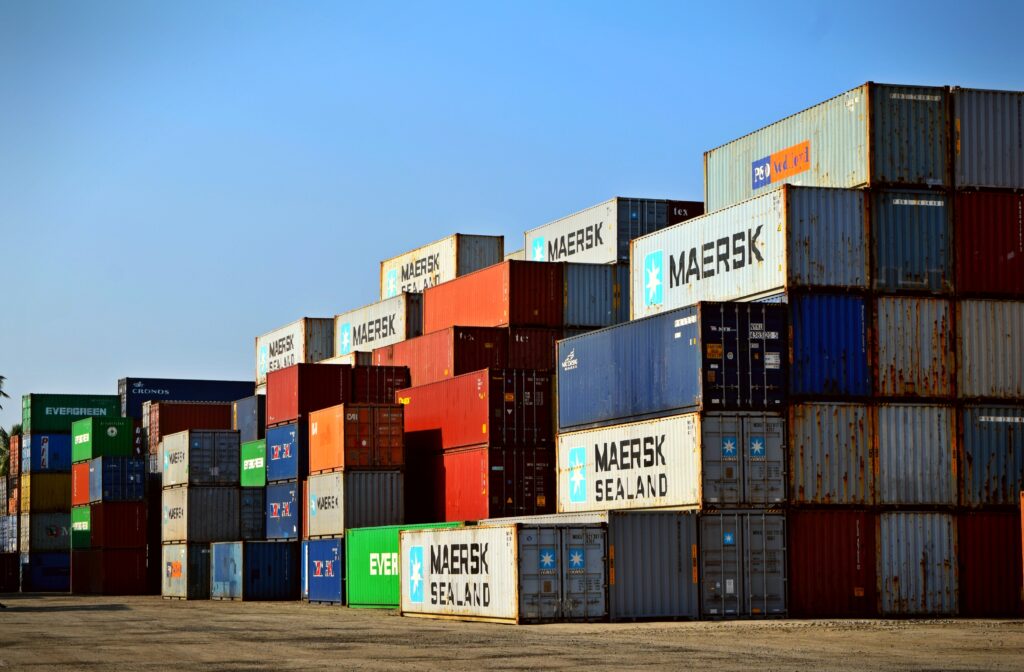
Most people associate shipping containers with colorful rectangular boxes onboard ships or at ports, waiting to be loaded. While the vast majority of shipping containers are known as ‘general purpose’ or ‘dry freight’ containers – the very same closed boxes in the image, used mainly for shipping dry goods – there are in fact many different types of shipping containers, differing by both their use, measurements and even shape.

Shipping containers at port container terminal
Ocean containers come in different sizes and measurements, although 20 feet and 40 feet dry cargo containers are the most common. © Pexels.

Although over 90 per cent of the world’s shipping containers are made up of dry cargo containers, even those differ in size. As one might guess, the measurements of your shipping container are extremely important as they determine how much cargo you can load into (or onto) your container and how much that will cost – different-sized containers are usually charged differently.

Some goods may also not be suitable for ocean freight with regularly closed containers. Depending on your cargo type, different container types might be necessary – coal and fish have different shipping requirements, after all. Fortunately, the standardization of ocean shipping containers has made choosing and understanding different container types very simple across the board.

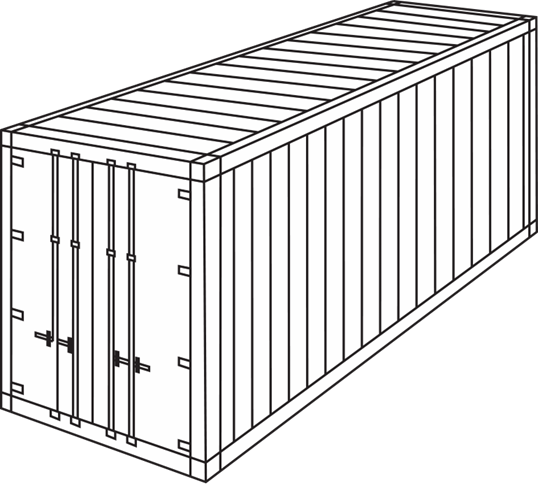
Dry Cargo container (DC)

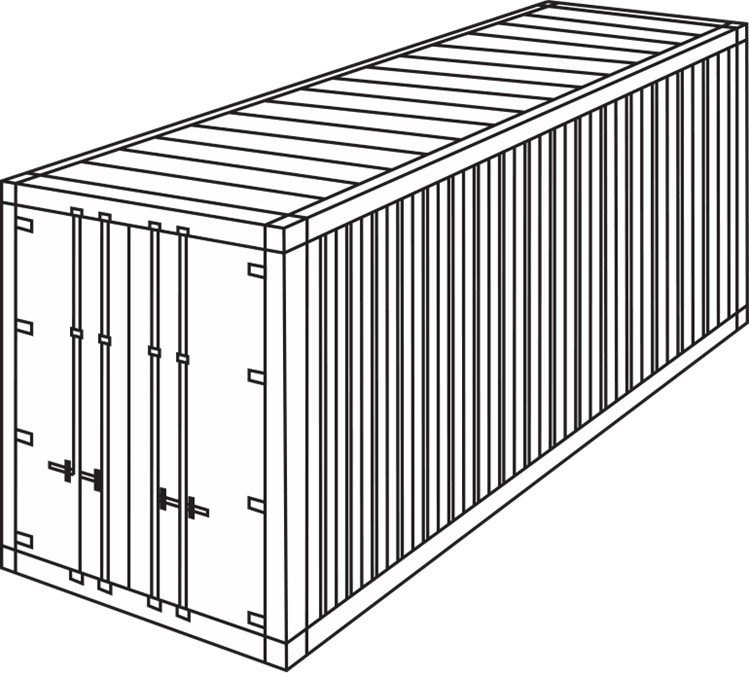
Image of 20 feet dry container.
20ft Dry Container.

The most common container type is undoubtedly the dry cargo or dry storage containers, which make up approximately 90 percent of all shipping containers. These containers can be divided mainly into 20 or 40 feet sizes and are manufactured from either aluminium or steel. They are suitable for most types of cargo. Aluminium dry containers have a slightly larger payload than steel, and steel dry containers have a slightly larger internal cube.

The most common dry cargo container sizes are:

  • 20 feet dry cargo container = 20ft DC
  • 40 feet dry cargo container = 40ft DC
What are the dimensions of 20 feet and 40 feet dry cargo shipping containers?
20ft DC shipping container dimensions:
Internal length (m) Internal width (m) Internal height (m) Payload (kg) Cubic capacity (m3)
5,90 2,35 2,39 21 700 33,2
40ft DC shipping container dimensions:
Internal length (m) Internal width (m) Internal height (m) Payload (kg) Cubic capacity (m3)
12,03 2,35 2,39 26 800 67,7

High Cube Dry Cargo container (HC)

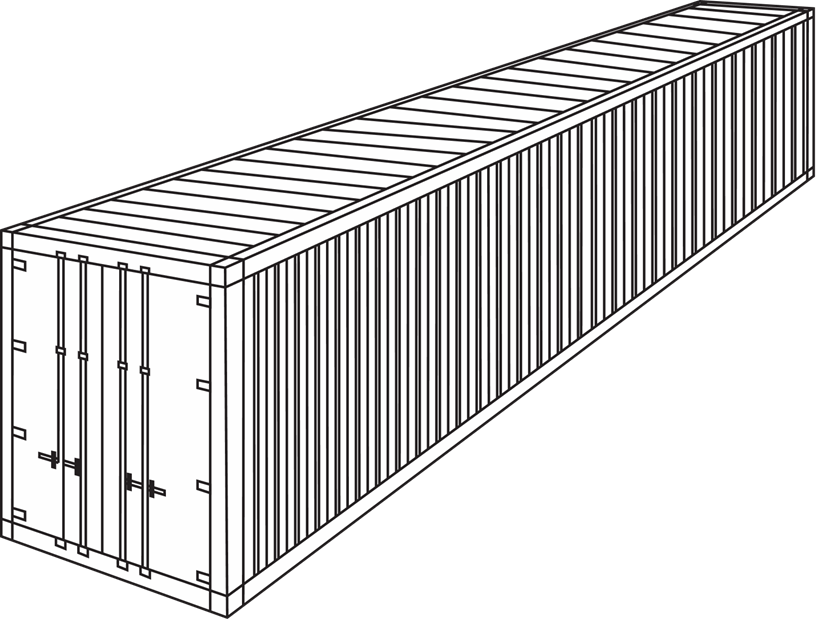
Picture of 40ft High Cube container.
40ft High Cube container.

High cube dry cargo containers are identical to the regular containers in all aspects except height. Being a foot higher, they allow for more cargo space. High cube dry cargo containers come mainly in the following dimensions:

  • 40 feet high cube dry cargo container = 40ft HC
  • 45 feet high cube dry cargo container = 45ft HC
What are the dimensions of 40 feet and 45 feet high cube shipping containers?
40ft HC shipping container dimensions:
Internal length (m) Internal width (m) Internal height (m) Payload (kg) Cubic capacity (m3)
12,03 2,35 2,70 26 500 76,3
45ft HC shipping container dimensions:
Internal length (m) Internal width (m) Internal height (m) Payload (kg) Cubic capacity (m3)
13,56 2,35 2,70 27 500 86,0

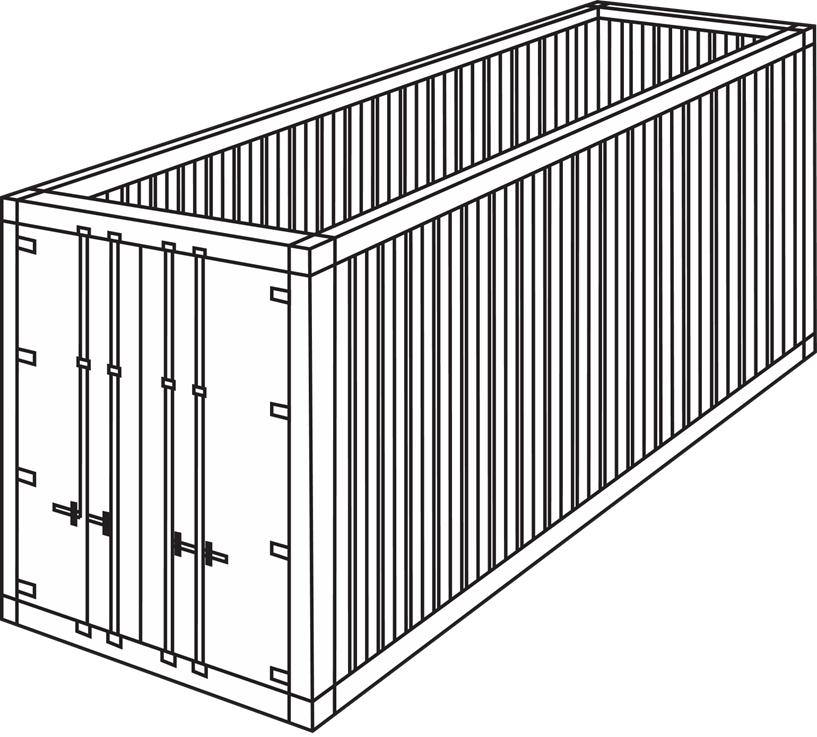
Open Top container (OT)

Picture of 20ft Open Top container.
20ft Open Top container.

Open-top containers are another standard type of ocean container, which are mostly used to transport overweight cargo. The open top enables for easier loading and unloading of heavy or cumbersome cargo and instead of a steel or aluminium roof, they can be covered with a tarp.

  • 20 feet open top container = 20ft OT
  • 40 feet open top container = 40ft OT
  • 40 feet open top high cube container = 40ft OT HC
What are the dimensions of 20 feet and 40 feet open-top shipping containers?
20ft OT shipping container dimensions:
Internal length (m) Internal width (m) Internal height (m) Payload (kg) Cubic capacity (m3)
5,89 2,35 2,35 28 220 32,5
40ft OT shipping container dimensions:
Internal length (m) Internal width (m) Internal height (m) Payload (kg) Cubic capacity (m3)
12,03 2,35 2,34 26 500 66,2

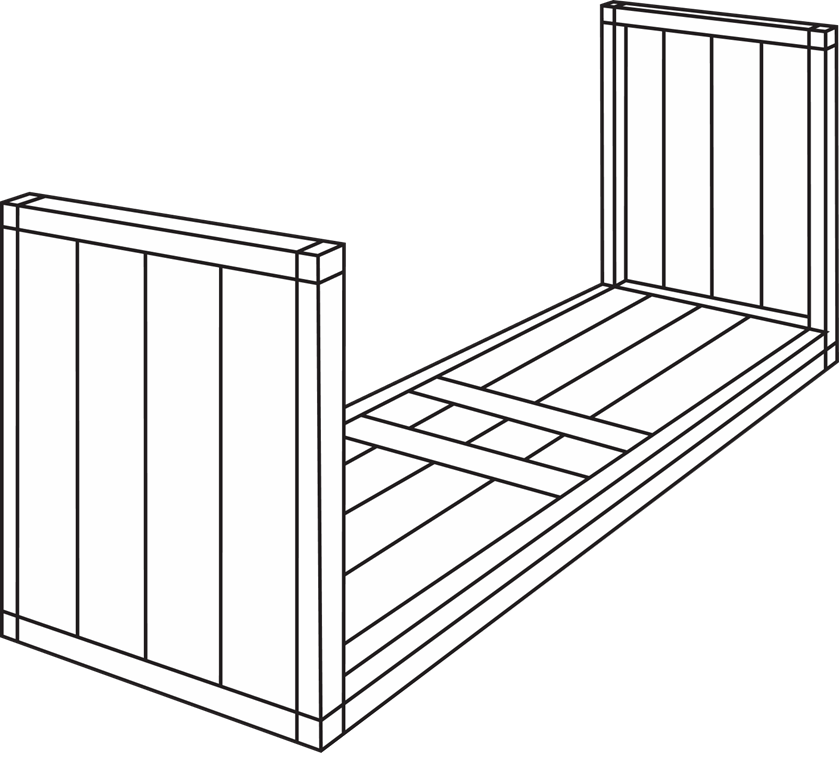
Flat Rack container (FR)

Picture of 20ft Flat Rack container.
20ft Flat Rack container.

With collapsible sides, flat rack containers are very flexible and suited for transporting a wide variety of goods, including extremely heavy cargo that needs loading from the top or sides. Collapsible and non-collapsible flat rack containers can come with or without walls.

  • 20 feet flat rack container = 20ft FR
  • 40 feet flat rack container = 40ft FR
  • 40 feet flat rack high cube container = 40ft FR HC
What are the dimensions of 20 feet and 40 feet flat rack shipping containers?
20ft OT shipping container dimensions:
Internal length (m) Internal width (m) Internal height (m) Payload (kg) Cubic capacity (m3)
5,94 2,40 2,35 30 140 33,5
40ft OT shipping container dimensions:
Internal length (m) Internal width (m) Internal height (m) Payload (kg) Cubic capacity (m3)
12,13 2,40 2,14 40 000 62,2

Reefer container (RF)

Picture of 20ft Reefer container.
20ft Reefer container.

Refrigerated containers or reefer containers are used to transport goods requiring temperature-controlled conditions in transit, such as fruit, vegetables, dairy products and meat. It is fitted with a refrigeration unit which is connected to the carrying ship’s electrical power supply.

  • 20 feet refrigerated container = 20ft RF
  • 40 feet refrigerated container = 40ft RF
What are the dimensions of 20 feet and 40 feet reefer shipping containers?
20ft RF shipping container dimensions:
Internal length (m) Internal width (m) Internal height (m) Payload (kg) Cubic capacity (m3)
5,44 2,29 2,27 27 700 28,3
40ft RF shipping container dimensions:
Internal length (m) Internal width (m) Internal height (m) Payload (kg) Cubic capacity (m3)
11,56 2,28 2,25 29 520 59,3

Insulated or thermal container

These shipping containers have controls for regulating temperatures, usually for maintaining a higher temperature than regular containers. Suitable for long-distance transportation of temperature-sensitive products.

  • 20 feet insulated container
  • 40 feet insulated container

Special-purpose shipping containers

The six main container types listed above are the most commonly used and seen in the industry but in reality, there are many different so-called special-purpose shipping containers. These containers usually have a more narrow purpose which means they are suited for a specific type of cargo.

Such containers are:

Ventilated shipping container

The ventilation system allows for hot air to leave and fresh air to enter the container, which is good for certain types of goods. Most commonly used for shipping coffee, these containers are also sometimes called coffee containers.

ISO tank shipping container

Used for transporting liquids and gases, the tank containers can hold a variety of cargo from oil to hazardous substances – you can read more about shipping dangerous goods here.

Tunnel shipping container

Similar to standard dry cargo containers with doors on both ends, allowing for easier access.

Open-side shipping container

Standard-size dry cargo container with side doors for easier access.

Double doors shipping container

Same as before, except doors can cover the entire side, allowing for best-side access.

As you might guess by now, the shipping containers list doesn’t actually end even here. You can read about even more different types of shipping containers and their purposes here.

Summary table: dimensions and loading capacity of different shipping containers

The following table gives the measurements for the most common container sizes and types in the metric system. When choosing shipping containers, always confirm container sizes with your supplier to ensure you both are talking about the same type of containers.

  Internal length (m) Internal width (m) Internal height (m) Payload (kg) Cubic capacity (m3)
20 ft Dry Container 5,90 2,35 2,39 21 700 33,2
40 ft Dry Container 12,03 2,35 2,39 26 800 67,7
20 ft High Cube 5,90 2,35 2,69 26 500 37,2
40 ft High Cube 12,03 2,35 2,70 26 500 76,3
20 ft Open Top 5,89 2,35 2,35 28 220 32,5
40 ft Open Top 12,03 2,35 2,34 26 500 66,2
20 ft Reefer Container 5,44 2,29 2,27 27 700 28,3
40 ft Reefer Container 11,56 2,28 2,25 29 520 59,3
20 ft Flat Rack 5,94 2,40 2,35 30 140 33,5
40 ft Flat Rack 12,13 2,40 2,14 40 000 62,2


Conclusion

Ocean shipping containers come in many different shapes and sizes. For anyone looking to ship goods internationally in shipping containers, taking a moment to familiarize yourself with the different container types, purposes and measurements can save both time and money. It’s important to keep in mind that different containers have different costs.

While standard-size shipping containers such as 20 feet and 40 feet cargo containers have usually fixed prices, special shipping containers usually require a direct quotation from the provider.
With MyDello you can instantly compare options across hundreds of shipping providers to find the best possible solution for your shipping needs. Visit MyDello to get an instant quote.

Matthew McConaughey, who has been awarded the best actor Oscar, ordered a sauna from the Estonian company Iglucraft. MyDello was proud to lead the transportation process.

MyDello & Iglucraft – Partnership

MyDello has been a partner for Iglucraft for quite a while now, but this time it was a bit more special. First of all, the end customer was notable, and it meant for MyDello, that at the beginning of the process, the exact destination address was not revealed. Luckily, you can get the first offer from MyDello to plan your route only by knowing the approximate area. The shipment ended up in Hawaii, which is not the most common destination in Estonia.

MyDello takes the stress out of global shipping. Instantly compare options across hundreds of shipping providers to find the best possible solution for your shipping needs. Visit MyDello to get an instant quote.


MyDello’s significant role

From the client side, almost all things related to logistics were trusted by MyDello’s team and partners. The process started in Viljandi County, Estonia, where an empty container arrived at the Iglucraft factory. The company has many international clients and has therefore designed its saunas and small houses to fit into international standard containers. There are only a few millimeters of free space in the container after the sauna is fitted in with some softening.

From the Iglucraft factory, the shipment moved on to Muuga port in Estonia. From there, it moved to the main European port and from there to the port of Los Angeles. There were quite a few delays at the ports on the western coast of the U.S. at the time, which also meant some for this consignment. The delay at the Port of Los Angeles added a few months to the delivery time.

The sender or receiver generally handles on-the-spot transportation. Still, Matthew McConaughey’s representatives asked us to take care of all logistics on the island of Hawaii. For that part, we used our partner, who lifted the shipment out of the container on-site, ordered a crane, and loaded Iglucraft to the final location.

sauna interior

Ocean freight – The best option

Mainly the use of maritime transport was the only conceivable way, as air transport would have meant a six-figure cost for transport. Using a ro-ro ship was also an option at first, but in that case, a container could have been transported from Europe to the U.S. East Coast, and it would have to pass through the entire U.S. on roads.

MyDello was delighted to engage in such a unique project in terms of customer and all supporting activities. Any extra action the logistics partner has to take to handle such cargo means careful planning and using trustworthy subcontractors. It happens only a couple of times a year, which makes it more interesting. From MyDello we wish a good time with Iglucraft to Matthew McConaughey and his family.

Take advantage of Mydello’s years of logistics industry knowledge by contacting us and talking to our team of experts.

The MyDello logistics portal has become a partner in the daily logistics management of thousands of companies in just under a year. Since the launch of the platform, we have constantly updated the platform to make logistics fully automatic.

MyDello History

The MyDello platform was founded in 2021, whit the goal to make logistics simple and efficient. MyDello’s primary goal is to provide a simple solution that a logistics specialist can handle daily, whereas the long-term goal is to make the entire supply chain organization fully automated. A the platform evolves, this becomes more and more likely.

Why pick MyDello?

MyDello combines the various parties in the supply chain: we reduce the number of intermediaries, digitalize all information, and contribute to ensuring that the costs to logistics are minimal. According to our data, using the platform means 15-20% lower costs on average, and our customers value it highly.

MyDello is currently available in Estonia, Latvia, Lithuania and Sweden.

MyDello takes the stress out of global shipping. Instantly compare options across hundreds of shipping providers to find the best possible solution for your shipping needs. Visit MyDello to get an instant quote.

Read more about how the platform is actively developing https://www.delfi.ee/artikkel/120072032/revolutsiooniline-eesti-logistikaplatvorm-areneb-iga-paevaga

International trade and logistics are complex. Countries have different laws and regulations and it is really challenging to understand and follow them. Therefore, standardized global rules called terms of delivery, also known as incoterms 2020, have been set in place.

What is Term Of Delivery?

The Term Of Delivery is the standard contract used to define responsibility and liability between the seller and the buyer for the shipment of goods. Simply put, the term of delivery determines how far along into the process the supplier will ensure that the goods are moved and at what point the buyer takes over the shipment process.

There are two main aspects to consider:

  • Till what point the seller covers the freight costs and from where the buyer pays for transport?
  • To what point the risk of damaging or losing the cargo is for the seller and from where for the buyer?

Additionally, some Incoterms determine if the cargo needs to be insured.


The logistics industry can be confusing and we all need a little advice sometimes, give us a call and benefit from MyDello’s years of experience.  

What are incoterms 2020?

Incoterms are something everyone shipping goods internationally will encounter sooner or later. Short for International Commercial Terms, Incoterms are a set of pre-defined commercial terms which relate to international commercial law. These terms determine the rights and obligations of the parties involved in the purchase or sale of goods.

Why are Incoterms necessary? Because international trade and logistics are complex and countries have different laws and regulations, which are often challenging to understand and follow. International shipments thus run the risk of differing interpretations of rules in different countries.

To make international shipping more understandable for both buyers and sellers, standardized global rules called terms of delivery or incoterms 2020 have been set in place.

Two ocean vessel with containers at port
Goods shipped by ocean freight. © Photo: Pixabay.

How are International Commercial Terms used?

Incoterms can be recognized by a set of three-letter terms most commonly present in international contracts for the sale of goods. These terms are incorporated into sales contracts to provide a standard solution for delivery costs, risks and responsibilities. When shipping goods internationally, it is thus important to be aware of the meanings of different terms of delivery.

Incoterms are marked by three letters followed by a location: i.e. CIF London. This gives the buyer and seller information about the rules, risks and costs of the delivery as to the location. In order to understand the meaning of these Incoterms, we must first understand the different types of Incoterms.

In total, there are 11 rules that define who is responsible for what in international transactions: EXW, FCA, FOB, FAS, CPT, CIF,  CFR, CIP, DPU, DAP, and DDP. Different Incoterms are used for different types of transportation. According to transportation, these terms are divided into two categories:

  • EXW, FCA, CPT, CIP, DPU, DAP, and DDP are used for all transportation types (ocean freight, road freight, rail freight, air freight)
  • FAS, FOB, CFR, and CIF are only used for ocean freight

What is the latest version?

The newest set of Incoterms known as Incoterms 2020 is the ninth official version of Incoterms and was published on September 10, 2019. The International Chamber of Commerce published the first work on international trade terms in 1923, but the first Incoterm was officially published in 1936 and updated in the years to come.

Why are these terms important?

While Incoterms are used to provide clarity about the transaction and international shipment rules, they can seem difficult to understand at first glance. To a layman, ‘CIF Incoterms’ might not mean much. Third-party logistics companies like MyDello deal with Incoterms every day, but it’s very important that both the buyer and seller understand exactly what they are signing when agreeing to an international sales contract.

Additionally, some Incoterms determine if the cargo needs to be insured. Not understanding Incoterms means that you might end up with a much larger shipment cost than originally planned. As such, Incoterms are and should always be taken into account when calculating freight rate estimations.

CFR, CIF and FAS Incoterms for example require the buyer to pay all costs at the port of destination and organize transportation from the port to the final destination. Unaware buyers might assume that the shipment will be delivered to the final destination and must deal with a bad surprise when the shipment arrives at the port of destination.

Example:

For a shipment from London to Shanghai, Incoterm CIP Shanghai will mean that the UK seller will be responsible for transporting the goods to the destination assigned by the buyer, in this case, Shanghai. The risk, however, is transferred to the buyer upon loading the goods from the seller’s premises. According to CIP Incoterm, the seller must also insure the goods while transit in the buyer’s favour.

If the goods happen to be damaged upon arrival and the seller’s insurance reimburses the buyer because that was in the CIP contract. Under CPT, the buyer would carry the loss themselves.

Sign up for a free account today


Four types of Incoterms

Thus it is important to understand the Incoterms related to your international shipment. For that, we must understand how Incoterms are read and what they mean. In general, Incoterms can be grouped into four categories according to the responsibility they place on the seller and buyer:

  • “C” terms (CFR, CIF, CPT, CIP)

    • Seller or manufacturer is responsible for contracting and paying for carriage of the goods, but not responsible for additional costs or loss of goods once they have been shipped.
  • “D” terms (DPU, DAP, DDP)

    • Seller or manufacturer is responsible for all costs and risks associated with delivering goods to the destination. Most responsibility is on the seller.
  • “E” term (EXW)

    • Only term where seller or manufacturer makes goods available at his own premises to the buyer. Least responsibility on the seller.
  • “F” terms (FCA, FAS, FOB)

    • Seller or manufacturer is responsible for delivering the goods to a carrier named by the buyer.

As seen above, buyers should always pay attention to Incoterms when quoting delivery costs for any shipment type, whether by land, air or sea. Some Incoterms will place more responsibility on the seller, whereas others might seem attractive to the seller. In any case, it pays to be aware of possible delays in international shipments and always thinks of every scenario to find the best solution for you.

What do different Incoterms mean?

Now that we understand why Incoterms are important and how they are categorized and used, it is time to get into each of them specifically. Here are all the Incoterms explained in depth. You can find a convenient and comprehensive table of all the Incoterms with their risks, costs and explanations here.

In addition to Incoterms, those dealing with international shipments, especially ocean freight, might come across additional terms and abbreviations. An overview of ocean freight terms alongside Incoterms can be found on this page.

Incoterms for all transportation modes (ocean freight, air freight, rail freight, road freight)

These Incoterms will be familiar to any international logistics operators, merchants, manufacturers, exporters and importers. Each Incoterm is an abbreviation for the type of delivery contract. The following Incoterms 2020 apply to all transportation modes.

EXW – Ex Works (named place of delivery)

The seller makes the goods available at their premises, but the buyer incurs all the risks of bringing the goods to the final destination. This term places the maximum obligation on the buyer and minimum obligations on the seller. EXW is regularly used when making an initial quotation for the sale of goods without any transportation costs included.


If parties wish the seller to be responsible for loading the goods and bearing the risks and costs of loading, this must be made clear by adding concrete wording in the contract of sale.

FCA – Free Carrier (named place of delivery)

The seller delivers the goods, cleared for export, at a named place, including the seller’s own premises. The goods can be delivered to a carrier named by the buyer, or to another party named by the buyer.

The seller is responsible for loading the goods onto the buyer’s carrier if the delivery occurs at the seller’s premises. If the delivery occurs at any other place, the seller is deemed to have delivered the goods once their transport has arrived at the named place and the buyer is responsible for both unloading the goods and loading them onto their own carrier.

CPT – Carriage Paid To (named place of destination)

The seller pays for the carriage of goods up to the named place in the destination country. But the goods are considered to be delivered when handed over to the first or main carrier. This means the risk transfers to the buyer upon handing goods over to that carrier at the place of shipment in the country of export. The seller has fulfilled their obligation when goods are handed over to the carrier, not when they reach the destination.

The seller is responsible for origin costs, including export clearance and freight costs for the shipment to the named place of destination. This could be either the final destination such as the buyer’s facilities or a port of destination. This has to be agreed to by the seller and buyer, however.

CIP – Carriage and Insurance Paid to (named place of destination)

Similar to CPT, except that the seller is required to obtain insurance for the goods while in transit. Under Incoterms 2020, CIP requires the seller to insure the goods for 110% of the contract value. Again, the seller has fulfilled his obligation when the goods are handed over to the carrier, not when the goods reach their destination. Risk transfers from the seller to the first carrier upon handing over the goods.

DAP – Delivered At Place (named place of destination)

The seller’s obligation is fulfilled when the goods are ready for unloading onto the incoming transport at the specified destination. Buyer bears the costs and risks of unloading the goods and arranges import customs clearance and import taxes if necessary.

DPU – Delivered At Place Unloaded (named place of destination)

The seller is required to deliver the goods and unload them at the named place of destination. The seller covers all the costs of transport including export fees and carriage, unloading from the main carrier at the destination port and destination port charges and assumes all risk until arrival at the destination port or terminal.

The seller’s obligation is fulfilled once the goods are unloaded at a specified destination and carry risk until arrival at the destination port or terminal.  All charges after unloading (for example, import duty, taxes, customs and on-carriage) are to be borne by the buyer. However, it is important to note that any delay or demurrage charges at the terminal will generally be paid by the seller.

DDP – Delivered Duty Paid (named place of destination)

The seller is responsible for delivering the goods to the named place in the country of destination and paying all costs in bringing goods to the destination (incl. import duties and taxes). The buyer is responsible for the unloading. Risk is transferred to the buyer at the delivery of the goods at the named place of destination.

DDP requires the seller to be aware of any duties, taxes and regulations in the buyer’s country and should thus be used with caution.


Incoterms for sea and inland waterway transport

These are the four Incoterms 2020 for international trade where transportation is conducted entirely by water.

It should be noted that these Incoterms are generally not suited for shipments in ocean freight containers. This is because the point at which risk and responsibility transfer is when the goods are loaded onboard of the ship – in containers it is impossible to verify the condition of the goods at this point.

FAS – Free Alongside Ship (named port of shipment)

The shipment is considered delivered when the goods are placed alongside the buyer’s vessel at the named port of shipment. This means that the buyer bears the costs and risks from that moment. FAS requires the seller to clear the goods for export by default. For alternative arrangements, the contract of sale should be modified.

FOB – Free on Board (named port of shipment)

The seller bears all costs and risks up to when the goods are loaded onboard the vessel. The seller’s obligations include the customs clearance of the export of the goods in the country of departure.

CFR – Cost and Freight (named port of destination)

The seller pays for the carriage of the goods up to the named port of destination. Risk transfers to the buyer when the goods have been loaded onboard the ship in the country of export.

The seller is responsible for origin costs including export clearance and freight costs for carriage to the named port. The shipper is not responsible for delivery to the final destination from the port or for buying insurance.

CIF – Cost, Insurance & Freight (named port of destination)

The seller is responsible until the goods have been unloaded from the deck at the port of destination. The seller must handle customs clearance, main transport to the port of destination and insurance for the goods. The seller’s delivery obligation ends upon handing the goods over to the carrier.


Conclusion

Incoterms give vital information about the costs and responsibilities of international shipments. It is important to pay attention to Incoterms both when getting quotations from the merchant or manufacturer as well as transportation and logistics services.

Not knowing Incoterms can mean the difference between getting your shipment delivered on time versus having to pay extra delivery costs or organize last-mile deliveries yourself.

MyDello takes the stress out of global shipping. One platform, all freight modes, instant quotes. Find out more. 

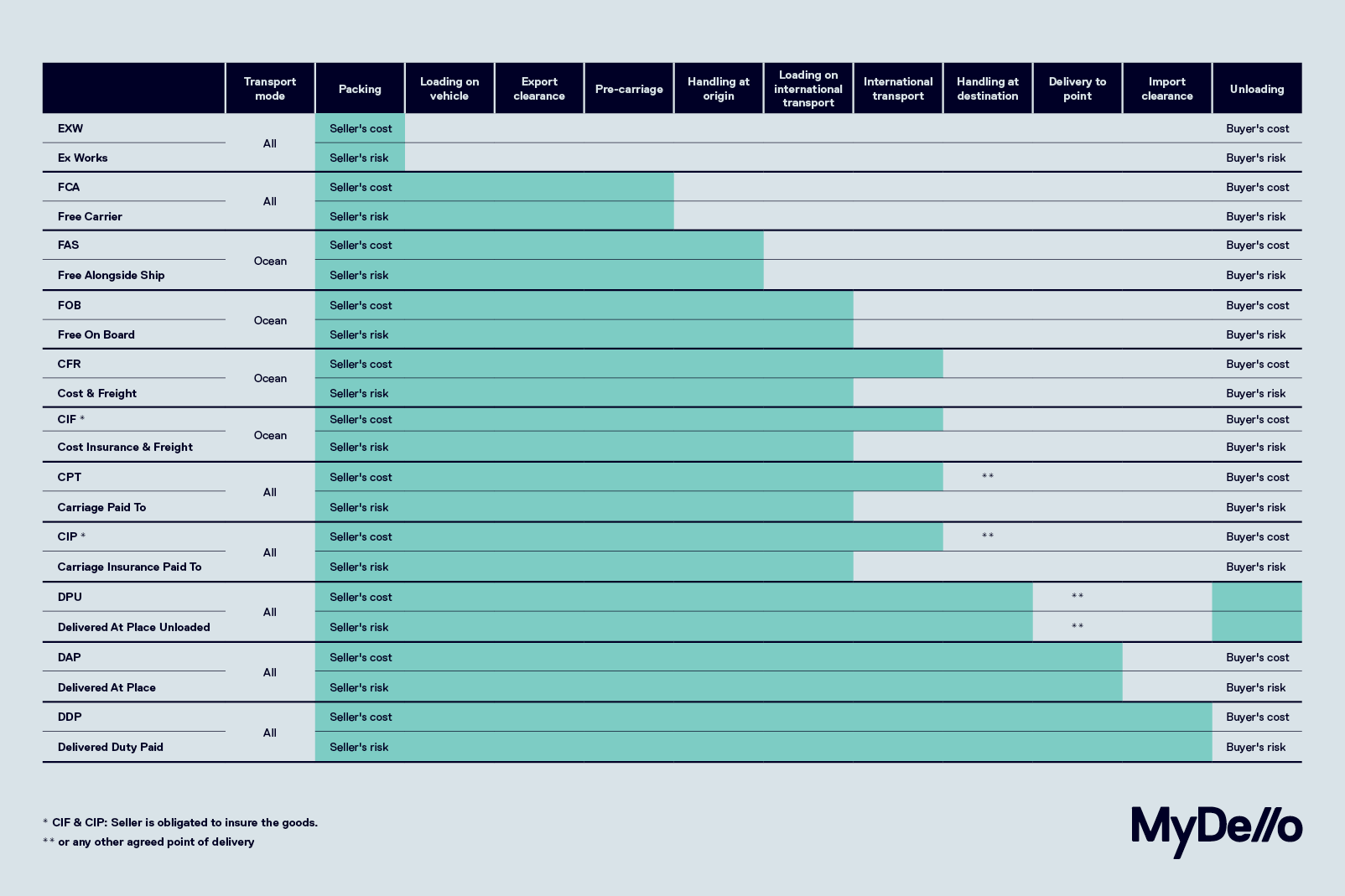
Incoterms table
Table 1. Incoterms 2020.