

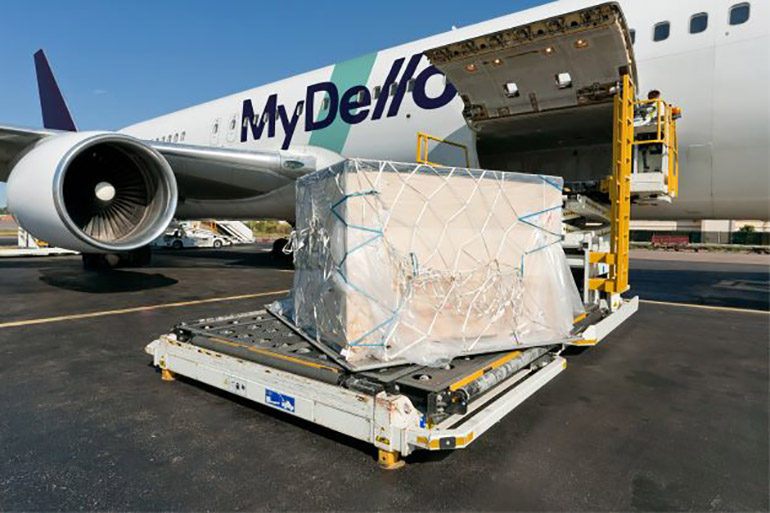
How quickly can you actually move cargo from a factory in Shenzhen to a warehouse in Berlin? While a flight might only take 10 to 12 hours, the reality of international logistics means your door-to-door timeline is governed by far more than just airspeed.
Contents
Create Your No-Cost Account Today and experience the New Era of Logistics
When planning your supply chain, you must first distinguish between express courier services and standard air freight. These are not merely different price points; they represent entirely different operational flows. Express services, such as those provided via our courier service, utilize integrated networks to prioritize speed and ease of handling. These are designed for door-to-door pickup and delivery for smaller shipments, typically under 70 kg, and offer the most streamlined path through customs.
Standard air freight serves as the primary engine for high-value industrial and e-commerce trade. This service typically involves consolidated shipments on either dedicated freighters or in the “belly” of passenger aircraft. For most importers, standard air freight offers the most effective balance of speed and cost for shipments that exceed courier weight limits but remain too urgent for rail or sea routes. Because air cargo often travels on passenger planes, size and weight limits are strictly enforced to ensure safety and balance.
The logistical landscape of 2026 also offers specialized solutions for those requiring higher predictability. For instance, MyDello Air Consolidated (MAC) provides guaranteed space on key routes from China. This service shields your business from the capacity volatility often seen in the general market, offering stable pricing and departures that are unaffected by the sudden spikes in demand that often ground other shipments during peak periods.
| Service Level | Typical Door-to-Door Transit Time | Best For |
|---|---|---|
| Express Courier | 1–4 Days | Documents, samples, and parcels under 70 kg. |
| Standard Air Freight | 6–10 Days | High-value goods, electronics, and urgent restocks. |
| Consolidated Air (MAC) | 8–12 Days | Cost-sensitive air shipments with guaranteed space. |
A frequent error in logistics planning is equating flight time with the total lead time. In reality, the time your goods spend in the air is often the shortest segment of the journey. To accurately calculate air freight transit time, you must account for several distinct stages that occur before and after the flight itself. This comprehensive view ensures that your production lines or customers are not left waiting due to a misunderstanding of airport processing speeds.
The process begins with first-mile trucking and origin handling, which typically consumes one to three days. During this phase, the goods are picked up from the factory, transported to a warehouse for consolidation, and then moved to the airport terminal. Export customs clearance and handover to the carrier follow, often requiring another one to two days. Only after these steps are completed can the actual airport-to-airport transit occur, which ranges from one to five days depending on whether the flight is a direct connection or requires transshipment through a hub.
Once the cargo lands in Europe, the process repeats in reverse. Import customs and destination handling must be completed, often taking another one to three days. Finally, last-mile delivery to your warehouse takes one to two days. We recommend using a resilient formula for your planning: Total Transit Time = First/Last-Mile Trucking + Handling (Origin & Destination) + Airport-to-Airport Transit + Buffer Time. Adding a one-to-two-day buffer for unforeseen congestion at cargo terminals creates a far more reliable delivery schedule.
Your choice of departure and arrival airports significantly influences both speed and cost. China’s logistics landscape is anchored by massive cargo hubs like Shanghai Pudong (PVG) and Hong Kong International (HKG). Shanghai is the primary exit point for dense cargo produced in the Yangtze River Delta, whereas Hong Kong remains a critical gateway for the Pearl River Delta due to its highly efficient processing and free-port status, which can often bypass certain administrative delays found on the mainland.
On the European side, major gateways like Frankfurt (FRA) and Amsterdam (AMS) act as the primary entry points for the continent. These hubs have the infrastructure to handle vast volumes, but their very size can lead to congestion during peak seasons. Strategic routing through secondary hubs can sometimes offer better value and faster ground handling without significantly sacrificing the speed of the main air leg.
For Nordic and Baltic businesses, we introduced MyDello Air Premium, which features direct flights from Shanghai to Helsinki. By utilizing Helsinki as a gateway, we bypass the heavy congestion of Central European airports, allowing for faster onward distribution to Sweden, Estonia, Latvia, and Lithuania. This direct control over the lane provides enhanced predictability and allows businesses to fix rates for an entire quarter, providing much-needed budget stability in a volatile market.
Even the most well-planned shipment can face significant delays if external variables are ignored. Customs and documentation errors remain the primary cause of shipping delays globally. If your Air Waybill (AWB) or commercial invoice contains inaccuracies regarding the HS code, value, or country of origin, your cargo will be held at the border. Such errors can quickly turn a seven-day transit into a fourteen-day ordeal, as customs authorities may require physical inspections or revised filings.
Seasonality is the second most impactful factor in the China-Europe lane. While the final quarter of the year is traditionally the “peak season” driven by holiday demand, the most significant disruption is the Lunar New Year. For Chinese New Year 2026, which falls on February 17, the logistics industry anticipates factory shutdowns of three to four weeks. During the “pre-holiday rush” in late January, space becomes extremely limited, and rates frequently spike as shippers compete for remaining capacity.
Environmental and labor factors also play a role in 2026 logistics. Winter weather can ground flights at major hubs, and labor disruptions at European airports can cause immediate backlogs that take weeks to clear. Using a digital platform that provides real-time shipment tracking is essential for maintaining visibility. This allows you to monitor your cargo’s progress and adjust your local operations if a delay is detected at a transshipment point.
Choosing air freight is a decision usually driven by extreme urgency or the high value-to-weight ratio of the cargo. However, it is useful to understand where it sits within the broader range of transportation modes available. Air freight is the fastest option but also the most expensive, often costing ten times more than ocean freight per kilogram. It also has the highest carbon footprint, which is an increasingly important consideration for corporate sustainability targets.
Rail freight has emerged as a compelling middle-ground solution. While rail freight transit times from China to Europe typically range from 15 to 35 days, the service is roughly twice as fast as sea freight at a fraction of the cost of air. With ongoing disruptions such as the Red Sea crisis adding 10 to 14 days to ocean freight transit times, more shippers are diversifying their approach to balance speed and budget.
| Transport Mode | China to Europe Door-to-Door | Relative Cost |
|---|---|---|
| Air Freight | 6–10 Days | Highest |
| Rail Freight | 15–35 Days | Medium |
| Ocean Freight | 45–60+ Days | Lowest |
If your delivery deadline allows for a three-week window, rail might be the more economical choice. However, for “line-down” situations or high-demand product launches, air freight remains the only viable option. Our platform allows you to see instant pricing across all these modes simultaneously. This transparency enables you to make an informed trade-off between the speed of an aircraft and the cost-efficiency of a container ship or train.
To optimize your air freight strategy, you must look beyond the quoted transit time and consider both reliability and the “landed cost.” One way to manage these costs is by understanding how chargeable weight is calculated. Air carriers charge based on either the actual weight or the volumetric weight, whichever is higher. For example, a shipment with dimensions of 120 cm x 80 cm x 60 cm and an actual weight of 70 kg would have a volumetric weight of 96 kg. In this case, you would be charged for the 96 kg, making efficient packaging essential for cost control.
Furthermore, choosing the right Incoterms is vital for maintaining control over your timeline. Terms like FCA (Free Carrier) give you more control over the main transit and cost compared to terms where the supplier chooses the forwarder. This control allows you to utilize professional logistics partners to ensure your goods aren’t “rolled” to a later flight during peak seasons, a common occurrence when using low-tier consolidated services offered by some suppliers.
Finally, consider the security and protection of your cargo. High-speed transit reduces the window for potential damage, but for high-value air shipments, we always recommend cargo insurance. This provides comprehensive protection that goes beyond standard carrier liability, which is often limited to specific amounts per gross kilogram. Having full coverage ensures that your investment is protected against unforeseen accidents or handling errors during the rapid door-to-door journey.
Create Your No-Cost Account Today and experience the New Era of Logistics
Navigating air freight from China to Europe requires a balance of speed, cost, and meticulous planning. By understanding the door-to-door process and accounting for seasonal peaks, you can build a more reliable supply chain that meets the demands of the modern market.
Key Takeaways: