


The global economy is a complex, interconnected machine where the “oil” that keeps the gears turning is quite literally oil. In 2026, the maritime industry—responsible for over 80% of global trade by volume—is facing one of its most significant challenges in decades. A deepening fuel crisis, spurred by geopolitical instability and shifting market fundamentals, has sent ripples through every stage of the supply chain.
From the cost of bunkering a massive container ship to the price of a parcel delivered to a consumer’s doorstep, the impact is unavoidable.
This article provides a comprehensive look at how current events in the Middle East, historical price trends, and expert economic forecasts are converging to redefine the logistics landscape. We will explore the direct correlation between crude oil volatility and freight rates, the specific role of the ongoing conflict in Iran, and what businesses can expect as they navigate these turbulent waters.
Contents
Create Your No-Cost Account Today and experience the New Era of Logistics
The relationship between geopolitical stability in the Middle East and the price of oil has always been sensitive, but 2026 has seen this tension reach a critical boiling point. The escalating conflict involving Iran and Israel has directly impacted the world’s most vital maritime chokepoints, most notably the Strait of Hormuz.
As of March 2026, approximately 20% of the world’s seaborne oil trade and nearly 19% of global liquefied natural gas (LNG) volumes pass through the Strait of Hormuz. Recent disruptions and the subsequent maritime blockade have led to what the International Energy Agency (IEA) describes as the “largest supply disruption in the history of the global oil market”.
When conflict flares in this region, the iran war impact oil prices 2026 becomes a central concern for traders and logistics managers alike. Even the threat of a closure adds a “geopolitical risk premium” to the crude oil price. In early 2026, analysts estimated that this premium added between $4 and $15 to every barrel of oil, even before physical supply was fully halted.
Iran itself is a major producer, contributing roughly 4% of the global oil supply in 2025. However, the broader iran israel war impact on oil prices stems from the secondary effects on neighboring producers like Saudi Arabia, Iraq, and the UAE, who rely on the same shipping lanes to reach Asian and European markets. By mid-March 2026, regional oil production reportedly dropped by millions of barrels per day as exports became “stranded” due to the blockade.
It creates a two-pronged crisis:
The iran war impact on oil prices is further compounded by damage to energy infrastructure. Reports of strikes on LNG facilities have caused localized spikes in energy costs, with spot prices in some regions increasing by over 140%. For the shipping industry, this means that the oil price today is no longer just a reflection of supply and demand—it is a reflection of global security.
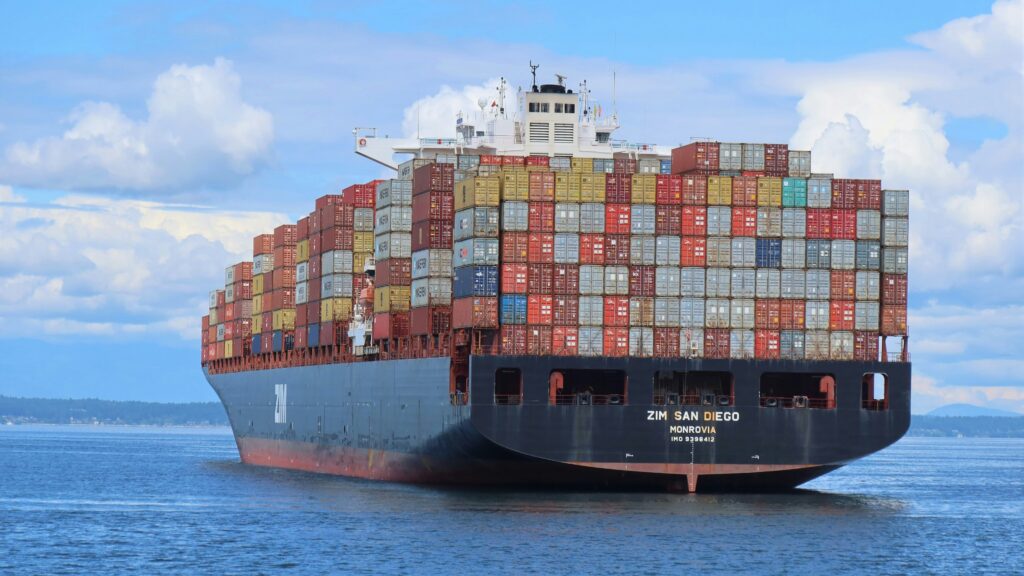
When the crude oil price climbs, the shipping industry is often the first to feel the heat. Fuel, specifically bunker fuel, accounts for a massive portion of a vessel’s operating expenses—often as much as 50% to 60% for older, less efficient ships.
To manage the volatility of the fuel crisis, ocean carriers utilize a mechanism known as the Bunker Adjustment Factor (BAF). This is a floating surcharge that carriers add to the base freight rate to compensate for fluctuations in fuel costs.
As the price of oil surged past $120 per barrel in March 2026, BAF charges climbed in tandem. For a business shipping a 40-foot container from Shanghai to Rotterdam, this means the final invoice can change significantly between the time of booking and the time of arrival.
Shipping companies rarely absorb these costs. Instead, they are passed down the line:
This is not limited to ocean freight. The fuel crisis has also hit road haulage and air freight. In fact, air freight is even more sensitive to fuel price hikes, with jet fuel accounting for 30–40% of an airline’s total operating costs. Major e-commerce giants have already begun implementing 3.5% “fuel and logistics-related surcharges” as of April 2026 to combat these rising overheads.
[Image showing the breakdown of shipping costs including fuel, labor, and port fees]
In response to high fuel costs, the industry often adopts “slow steaming”—the practice of operating ships at significantly lower speeds to reduce fuel consumption. While this saves money for the carrier, it increases lead times for the shipper. Many businesses are also forced to shift from air freight to ocean freight to save on costs, even if it means slower delivery.
To understand the current fuel crisis, we must look back at how the market has behaved over the last quarter-century. The price of oil has never been static; it is a story of extreme peaks and sudden valleys.
The early 2000s saw a steady climb in oil prices, driven by rapid industrialization in China and India. This culminated in the historic peak of July 2008, when Brent crude reached an all-time high of nearly $147 per barrel. However, the global financial crisis caused prices to collapse to under $40 by the end of that same year.
Following the recovery, oil prices stabilized between $100 and $120 for several years until the “Shale Revolution” in the United States led to an oversupply. In 2014, prices plummeted again, staying relatively low until the end of the decade.
The year 2020 provided one of the most bizarre moments in history: WTI crude futures briefly turned negative due to a lack of storage during COVID-19 lockdowns. However, as the world reopened, a “bull market” returned. The 2022 invasion of Ukraine by Russia sent prices back above $100, marking the start of a more volatile era for energy.
By the beginning of 2026, the market was already on edge. While 2025 had seen a downward trend with prices fluctuating in the $60–$80 range, the outbreak of the iran war in late February 2026 shattered that stability.
| Era | Key Event | Avg. Price (Brent) |
| 2008 | Global Financial Crisis | $97 |
| 2014 | US Shale Boom | $99 |
| 2020 | COVID-19 Pandemic | $41 |
| 2022 | Ukraine Conflict | $101 |
| 2026 | Iran-Israel Conflict | $80 – $120+ |
Predicting the oil price forecast iran war march 2026 is notoriously difficult, and experts often disagree. It is important to treat any forecast with caution, as the market is driven as much by psychology and speculation as it is by physical supply.
As of early April 2026, there is a significant split among major financial institutions:
The consensus is that while the initial spike was dramatic, the long-term trend depends on whether military action remains “targeted” or expands to include Iranian oil production infrastructure. If the blockade persists, some economists warn of a technical recession for energy-intensive economies.
Create Your No-Cost Account Today and experience the New Era of Logistics
The fuel crisis of 2026 is a stark reminder of the shipping industry’s vulnerability to global events. As the iran war impact oil prices continues to unfold, businesses must adapt to a new normal of higher surcharges and less predictable lead times.
Key points to remember:
Understanding what is the price of oil today is no longer enough; logistics professionals must understand why it is moving and how to mitigate the risks that come with it. By staying informed and utilizing modern tools, your business can weather the storm of the 2026 fuel crisis.