

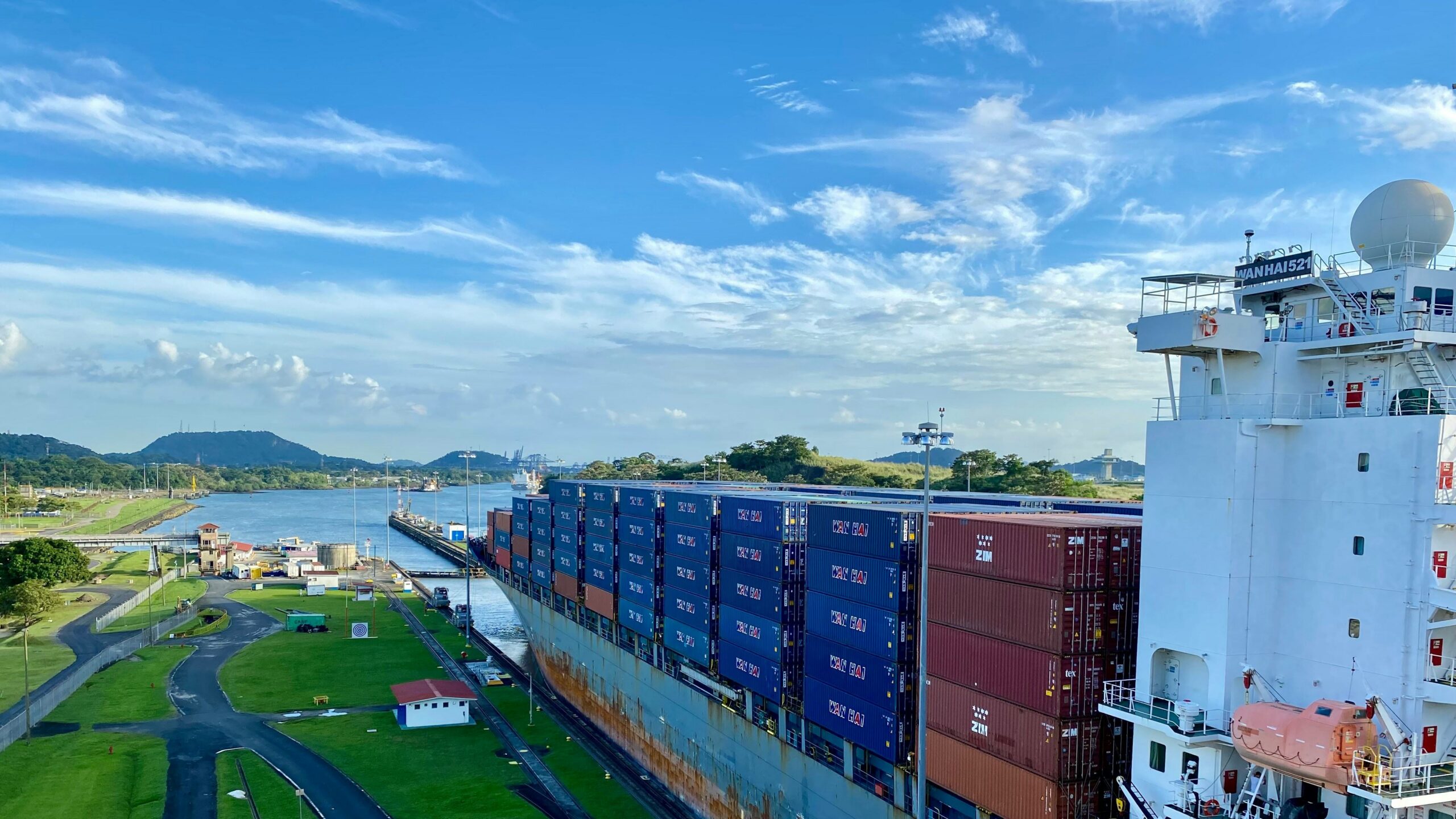
For over a century, the Panama Canal has been a vital artery of global commerce, a marvel of engineering that severed continents to stitch the world’s markets together. But in recent years, this critical waterway has faced unprecedented challenges. From severe droughts impacting the Panama Canal transit schedule to fluctuating wait times, the stability of Panama Canal shipping is no longer a guarantee—it is a complex variable that every logistics manager must solve. At MyDello, we believe that logistics should be simple, transparent, and efficient. Whether you are shipping goods from Asia to the US East Coast or managing a global supply chain, understanding the Panama Canal current status is critical. This comprehensive article explores the canal’s rich history, its immense importance, the root causes of its current constraints, and the future of its role in global trade.
Are your shipments facing delays due to global chokepoint congestion? MyDello simplifies logistics by comparing rates and transit times across air, sea, and rail instantly. Don’t let uncertainty disrupt your supply chain.
Create Your No-Cost Account Today and experience the New Era of Logistics
To understand the current complexities of the canal de panama, we must first look back at the monumental effort required to build it. The dream of connecting the Atlantic and Pacific oceans dates back to the early 16th century, but it wasn’t until the late 19th century that technology and political will aligned.
The initial attempt was led by the French in 1881, spearheaded by Ferdinand de Lesseps, the architect of the Suez Canal. However, the French effort collapsed under the weight of financial scandal and the devastating toll of tropical diseases like malaria and yellow fever, which claimed an estimated 20,000 lives.
The United States took over the project in 1904, following Panama’s independence from Colombia—a political maneuver heavily supported by President Theodore Roosevelt. The US construction effort was a triumph of engineering and public health. By controlling mosquito populations and utilizing an ingenious lock-and-lake system, the project succeeded where the sea-level approach had failed. On August 15, 1914, the cargo ship SS Ancon became the first vessel to officially transit the canal, forever changing global trade routes.
For decades, the panama channel remained under US control, a point of geopolitical tension that was eventually resolved by the Torrijos-Carter Treaties in 1977. On December 31, 1999, full control of the waterway was handed over to Panama. Since then, the most significant milestone was the completion of the “Expanded Canal” in 2016. This $5.25 billion project added a third lane of locks to accommodate massive “Neopanamax” container ships, ensuring the canal’s relevance in an era of mega-vessels.
The Panama Canal significance to global trade cannot be overstated. Before the canal, a ship traveling from New York to San Francisco had to navigate the treacherous Cape Horn at the southern tip of South America, a journey of nearly 21,000 kilometers (13,000 miles). The canal reduced this voyage to just 8,370 kilometers (5,200 miles), saving weeks of travel time and massive amounts of fuel.
Today, the canal serves as a critical shortcut for over 140 maritime routes connecting more than 1,700 ports in 160 countries. Its primary value lies in facilitating the “All-Water Route” from Northeast Asia to the US East Coast. For retailers and manufacturers, this route is often more cost-effective than shipping to the US West Coast and using more expensive rail and truck transport to cross the country. This is why the Panama Canal is important.
The canal handles a diverse array of cargo, from containerized consumer goods to bulk commodities like grain and coal, and energy products like Liquefied Natural Gas (LNG). In fact, the US is one of the largest users of the canal for exporting its agricultural products and LNG to Asian markets. Any disruption here sends shockwaves through the global economy, raising freight rates and delaying inventory for businesses worldwide.
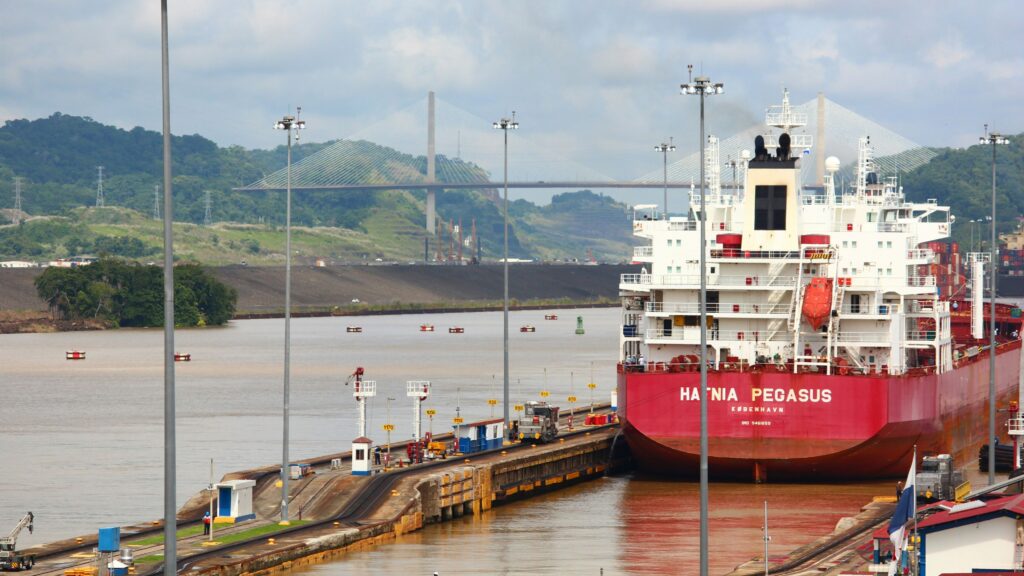
Historically, the Panama Canal traffic has accounted for approximately 3-5% of total global maritime trade by volume. In a typical year, the waterway sees between 13,000 and 14,000 vessel transits. However, recent years have seen significant volatility due to environmental constraints.
The fiscal year 2024 (October 2023–September 2024) was particularly challenging. According to official data from the Panama Canal Authority (ACP), total transits plummeted as a result of the drought. Daily transit slots, which normally hover around 36-38, were slashed to as few as 18 in early 2024.
This Panama Canal traffic decline was not uniform across all sectors. While container ships—which often book slots months in advance—maintained a degree of priority, other sectors like dry bulk carriers and LNG carriers saw massive declines. LNG transits, for instance, dropped dramatically as carriers sought more reliable routes to avoid the Panama Canal backup.
For logistics planners, the key question is often: “how long does it take to cross the panama canal?” The answer requires distinguishing between the physical Panama Canal transit time and the total waiting time.
The actual passage through the 82-kilometer (51-mile) canal takes between 8 to 10 hours. During this Panama Canal full transit, a ship enters a series of three locks (Miraflores, Pedro Miguel, and Gatun), which use over 100,000 tons of fresh water per chamber to raise the vessel 26 meters (85 feet) above sea level to the surface of Gatun Lake. The ship then traverses the Continental Divide before being lowered back down to sea level on the other side.
The real challenge in recent years has been the queue. In normal conditions, a ship might wait 24 to 48 hours. However, during the height of the 2023-2024 drought, the Panama Canal wait time for vessels without reservations skyrocketed. At its peak, the Panama Canal traffic jam saw over 160 ships waiting, with some facing delays of up to 21 days. This is why following the Panama Canal backlog news today is critical for shippers.
The cost is complex and based on the vessel’s type and size. A standard Panamax vessel might pay between $100,000 and $400,000 in Panama Canal fees. During periods of heavy congestion, the ACP auctions off “skip-the-line” slots. In late 2023, shippers reportedly paid auction premiums as high as $4 million, in addition to the standard tolls, just to secure a slot. A simple Panama Canal fees calculator does not exist; tolls are determined by the ACP’s detailed tariff structure.
The recent Panama Canal traffic decline is driven by a convergence of environmental and operational factors. The root causes include:
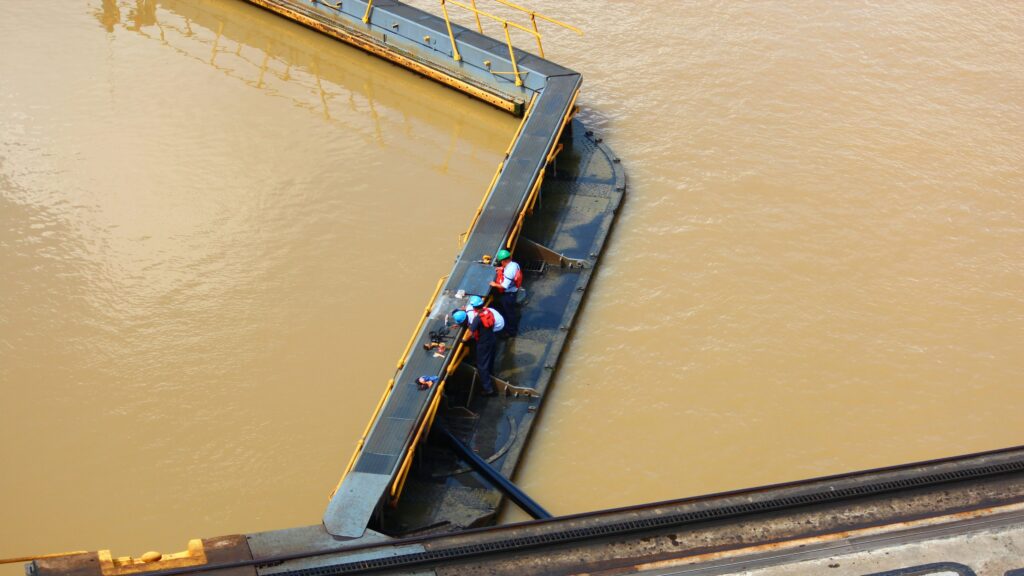
The Panama Canal drought that began in 2023 is the most severe operational threat the waterway has faced in its history. When did the Panama Canal drought start becoming a crisis? The situation escalated in mid-2023 when the El Niño climate phenomenon led to one of the driest years on record in Panama.
How does drought affect Panama Canal operations?
When the Panama Canal became congested, global supply chains adapted. Shippers and freight forwarders began utilizing alternative shipping routes.
The future of the Panama Canal will depend on its ability to manage water resources. If reliability cannot be restored, these alternative routes may become permanent fixtures in global logistics strategies.
Navigating these complex route options can be overwhelming. MyDello acts as your digital logistics partner, helping you find the best route—whether it’s the Panama Canal, the Cape, or a multimodal combination.
Create Your No-Cost Account Today and experience the New Era of Logistics
The Panama Canal remains a vital artery for global trade, but it is no longer the invincible shortcut it once was. The combination of the severe Panama Canal drought, fluctuating Panama Canal transit time, and rising fees has forced the logistics industry to become more agile and data-driven.
Your key takeaways are:
By staying informed and leveraging modern logistics tools, you can navigate even the most challenging waters and keep your supply chain moving.