

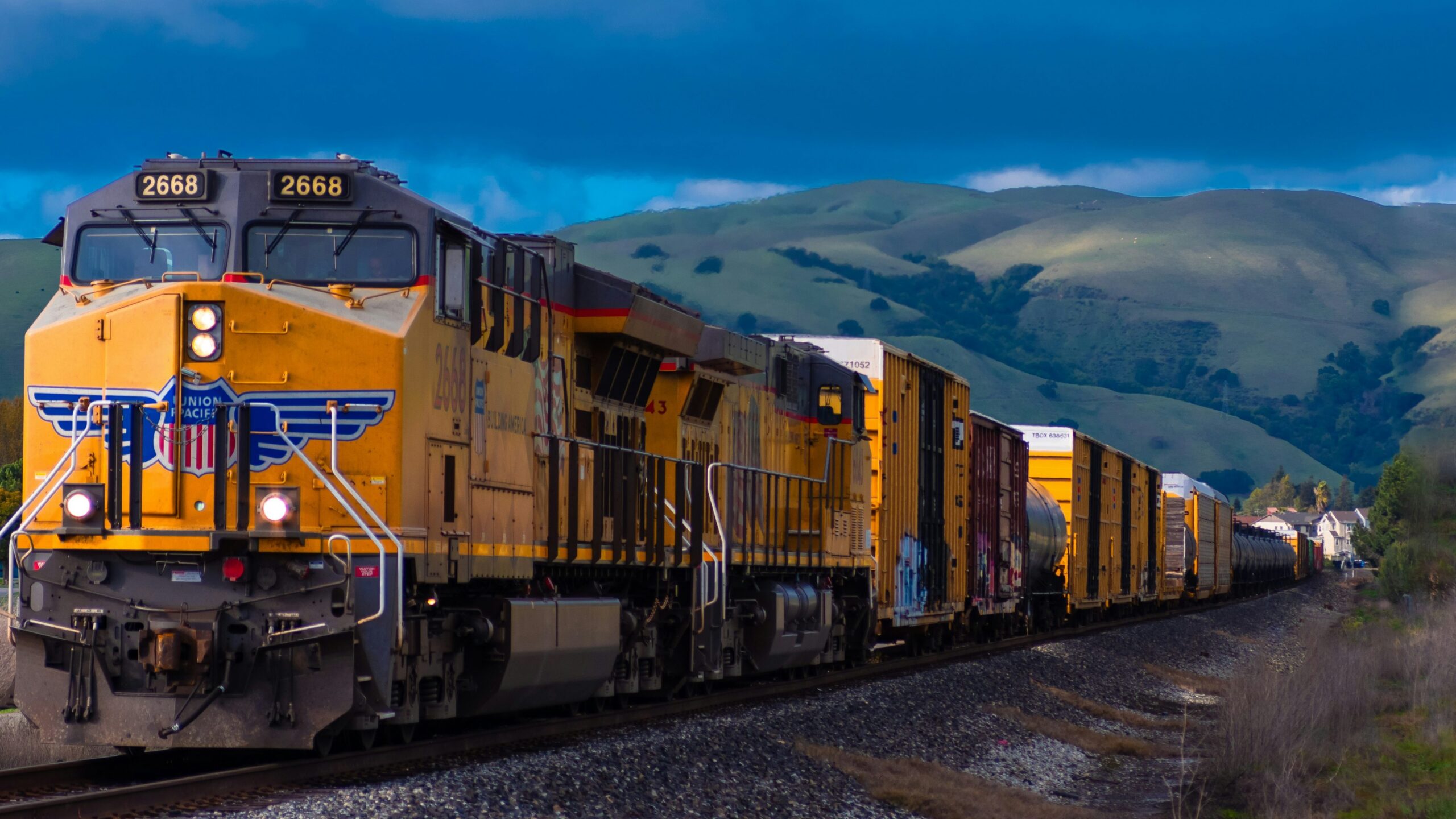
In the world of international logistics, rail freight is the strategic “middle ground”—significantly faster than sea freight and far more cost-effective than air freight. For businesses moving goods across the vast Eurasian landmass or within North America, rail offers a compelling balance of speed, cost, and reliability.
But how long does rail freight take? Calculating an accurate rail freight transit time in 2025 requires navigating a complex web of evolving routes, busy border crossings, and geopolitical factors. A simple “terminal-to-terminal” estimate is no longer enough.
At MyDello, our mission is to make logistics straightforward. This guide will provide you with the latest 2025 data, a clear formula for calculating your true door-to-door shipping timeline, and the strategic insights needed to leverage rail freight as a competitive advantage.
Stop guessing your shipping times. Get instant, real-time rail freight quotes and accurate, door-to-door transit estimates with MyDello’s digital platform today. Compare Rail vs. Sea vs. Air in seconds.
Create Your No-Cost Account Today and experience the New Era of Logistics
The transit time meaning in logistics is the total duration of a shipment from origin to destination. For rail freight, this is much more than just the time spent on the train. To understand the total freight transit time, you must consider the entire door-to-door lifecycle.
Here is the typical timeline for a rail shipment in 2025:
Rail freight volumes in 2025 reflect a year of strategic shifts. Geopolitical factors and infrastructure investments have reshaped the most critical corridors.
This remains the most established and fastest land bridge between China and Europe due to its mature infrastructure.
Also known as the Trans-Caspian International Transport Route (TITR), this route bypasses Russia and has seen explosive growth.
To get an accurate delivery date, you cannot rely solely on the “terminal-to-terminal” or port to port shipping transit time. A reliable rail transit time calculator methodology must account for the entire door-to-door journey.
Total Transit Time = First-Mile Time + Rail Haul Time + Border/Transshipment Buffer + Last-Mile Time
Step-by-Step Guide:
Pro-Tip: Always ask your logistics partner if their quote is “Terminal-to-Terminal” or “Door-to-Door.” The difference can be over a week.
Below are the estimated rail freight transit times for popular trade lanes in 2025, reflecting typical door-to-door durations.
| Route | Average Transit Time (Door-to-Door) | Notes for 2025 |
| China to Northern Europe (e.g., Germany, Poland) | 22 – 28 days | The “Northern Route.” Fastest and most predictable land option. |
| China to Southern Europe (via Middle Corridor) | 30 – 40 days | A strategic alternative, but slower due to multiple sea transfers. |
| China to US (Intermodal via West Coast) | 25 – 35 days | This answers “how long does a container shipment from China to the US take?” via sea + rail. Includes ocean freight to a port like Los Angeles, plus rail transit to inland hubs like Chicago. |
| Intra-Europe (e.g., Spain to Germany) | 4 – 7 days | Highly reliable and sustainable for cross-border EU trade. |
| US Cross-Country (e.g., Los Angeles to New York) | 8 – 12 days | The “land bridge” alternative to the Panama Canal. |
While generally more reliable than sea freight, rail is not immune to disruptions. Understanding these helps in planning.
Rail logistics is intricate. You need a partner who can navigate gauge changes, handle complex customs documentation across multiple borders, and pivot instantly if a bottleneck appears.
Why choose a digital partner like MyDello?
Ready to make rail freight a strategic advantage for your business? Sign up for MyDello today to access our global rail network, get instant quotes, and experience the future of simplified logistics.
Create Your No-Cost Account Today and experience the New Era of Logistics
In 2025, rail freight is a vital strategic option for global trade, offering a powerful balance between the high cost of air and the long transit time of ocean freight. However, accurately calculating the rail freight transit time requires a door-to-door approach that looks beyond simple terminal-to-terminal schedules.
By understanding the key routes, accounting for first- and last-mile transport, and building in buffers for border crossings, you can create a predictable and resilient supply chain. With a digital partner like MyDello, you have the expertise and technology to make that happen seamlessly.